An Interview With Klaus Lohmeyer of WERKSTATT:MÜNCHEN
“One Plus One Makes One”
19 October 2026
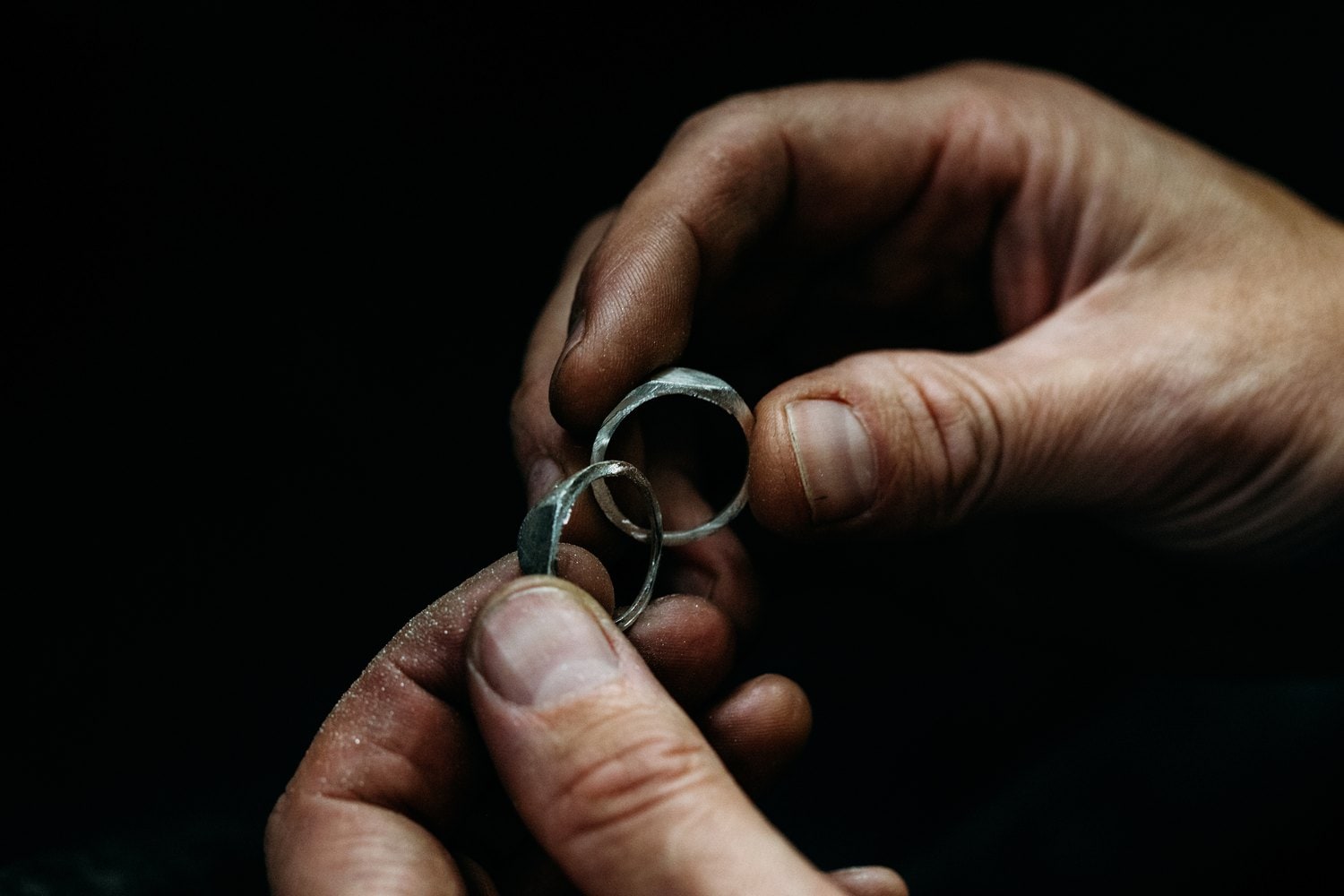
A designer interview series focused on the thinking behind the work, and what goes on behind the creation itself. This time: WERKSTATT:MÜNCHEN, the jewellery label based in Munich, Germany.
We spoke with Klaus Lohmeyer, who founded the label in 1996. The interview took place on 22 September 2026, online between his Munich workshop and Japan. One corner of that workshop is given over entirely to hammers. On the day we spoke, there were around ten people in the workshop — though, he said, he had not counted.
Why would anyone need that many hammers? And what does a man who says he does not believe in ornament want from jewellery? We took our time, from the first day he ever handled silver through to his tools, his materials, and the UNITY collection.
DESIGNER PROFILE
WERKSTATT:MÜNCHEN / Klaus Lohmeyer
Born and raised in Munich. He first handled silver at the age of 20, and went on to a school of gold and silversmithing for a classical training in art, design and craft that included drawing and typography. After graduating he produced work for a fashion designer, then set out on his own in order to realise his own ideas. He founded WERKSTATT:MÜNCHEN in 1996 and, from his first season showing in Paris, was carried by highly regarded stores.
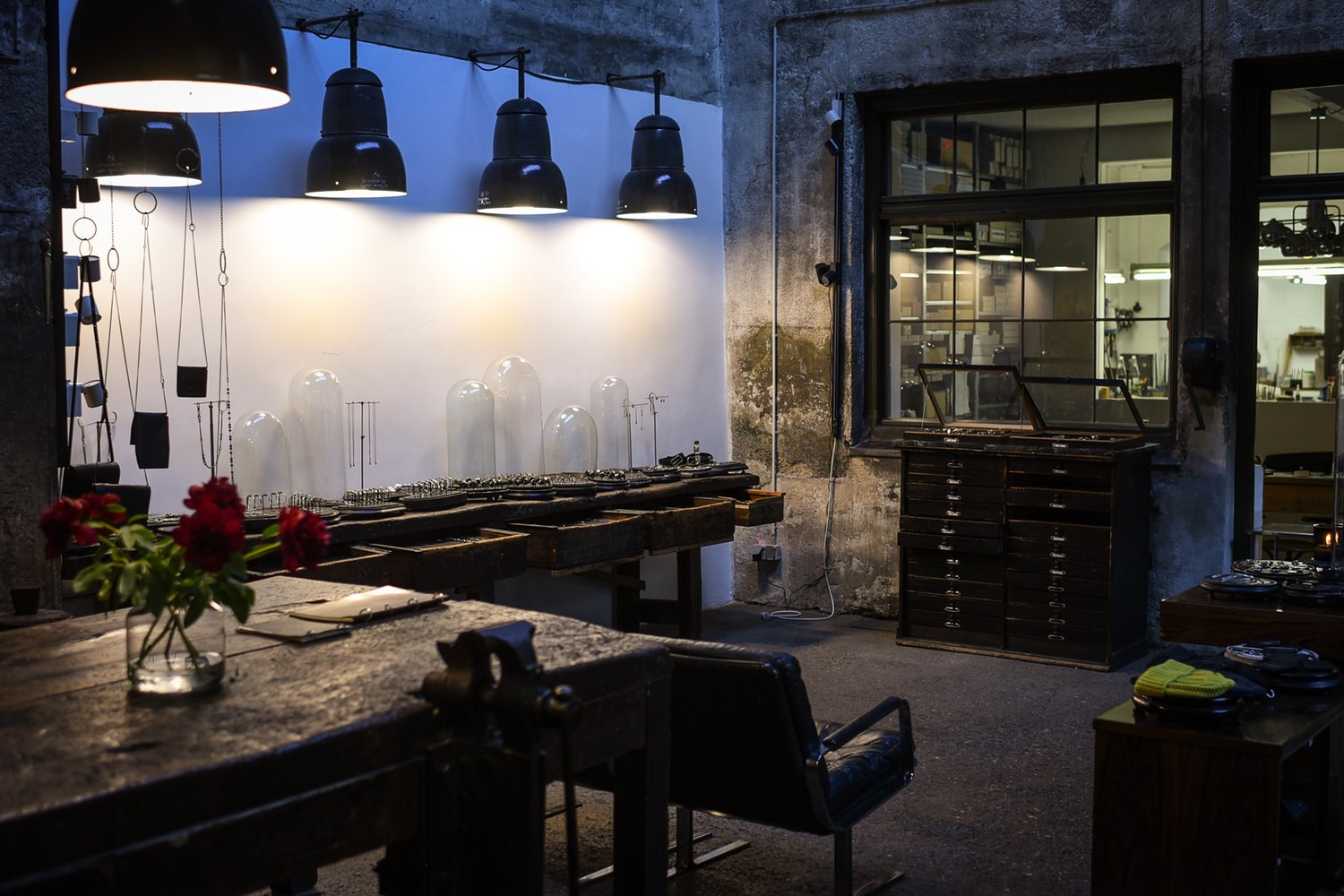
The workshop is a former bronze foundry built in the mid-19th century. Silver and leather were the first materials, with 22-carat gold added later. Nothing is plated — the colour you see is the material's own — and the work is built around the hammer, with whoever starts a piece seeing it through to the finish.
CONTENTSContents
CHAPTER 01
“Before I knew it, the day was gone” — the first day he handled silver
When did you realise you liked making things?
I think I became interested in making jewellery around the tenth grade [ed. note: equivalent to the first year of senior high school in Japan]. My brother and I used to mess about with copper wire. It may have been a little earlier than that.
At a certain point it struck me. Back then, in the early nineties, there was no jewellery for men. What existed looked out of reach to me. It was a very minimal era, and all I wanted was one plain silver ring. I found one, but it seemed quite expensive. So I thought: I ought to be able to make this myself.
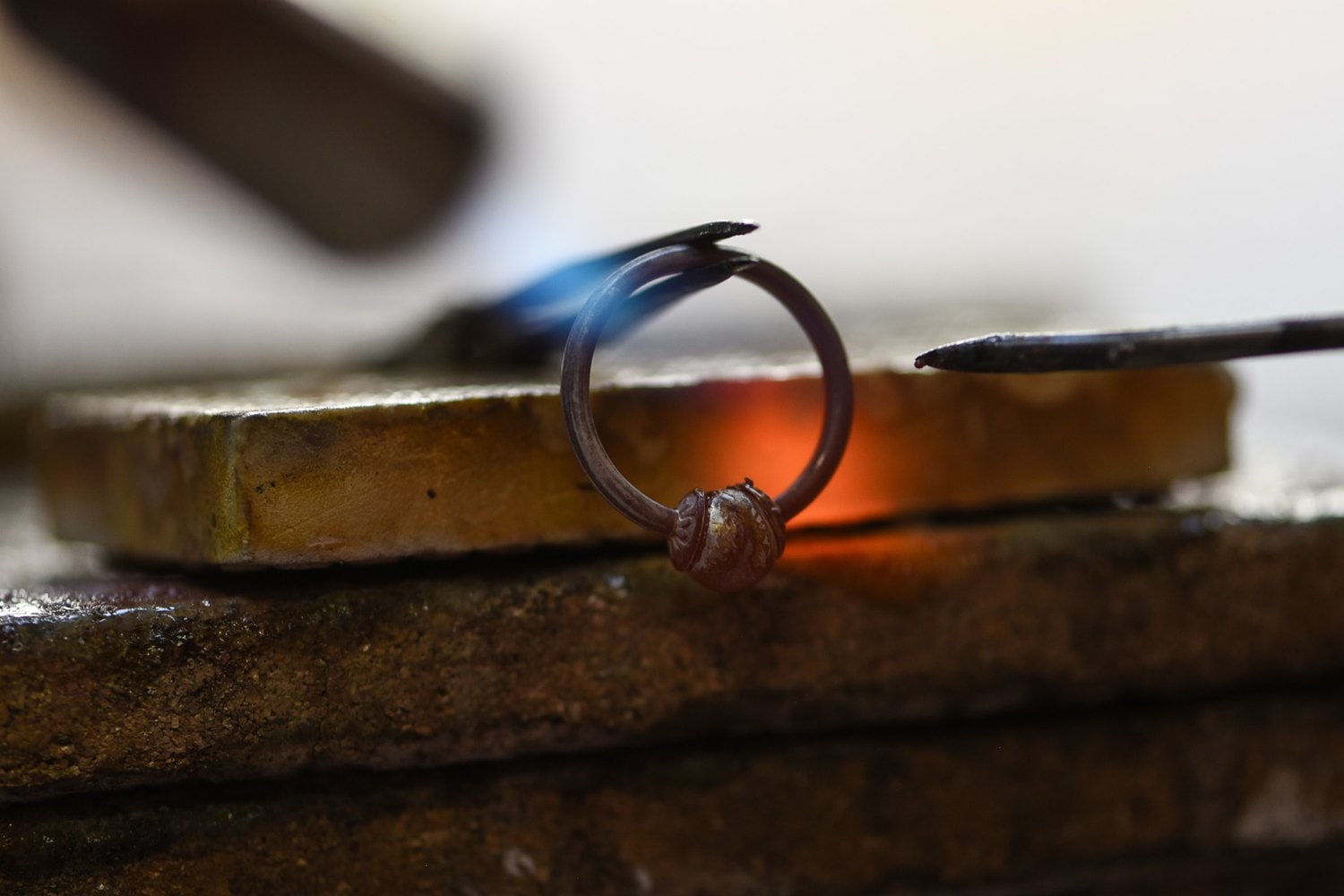
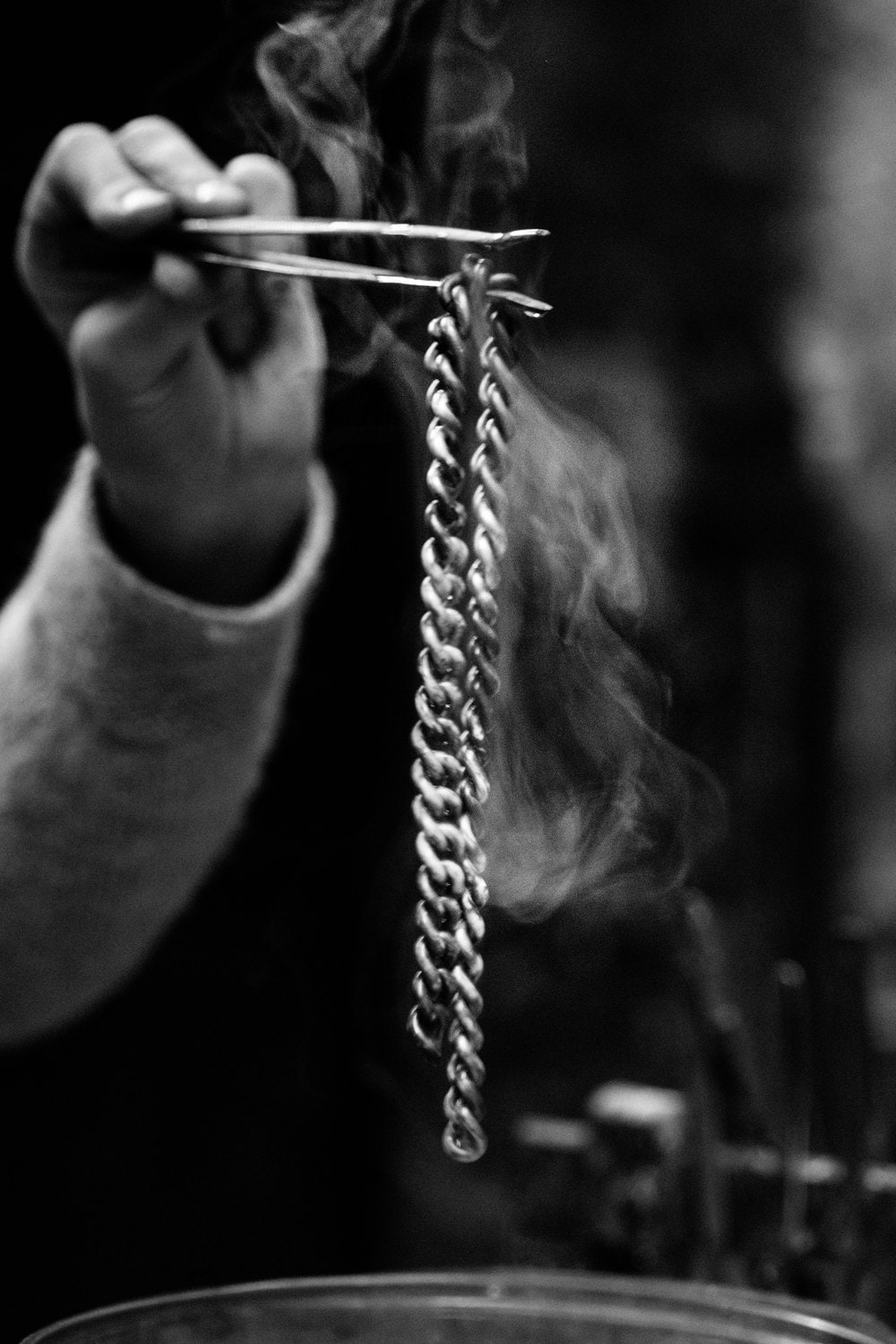
Soon after, I was given a piece of silver and a soldering [ed. note: joining metal to metal with a molten alloy] kit as a present. A simple thing, just a gas canister attached to it. I tried it out, and that first experience made me forget everything else. I forgot to smoke, forgot to eat, and before I knew it the day was gone.
I was a little caught by it. I thought: this might be the thing. I was 20 at the time. So I applied to school and decided to learn it properly, from the beginning.
So at the time you couldn't find anything you actually wanted to wear.
The eighties were overflowing with jewellery. Think how many bracelets the glam rock stars wore.
The reaction to that made the nineties a very minimal decade. Men in particular either wore no jewellery at all, or only something extremely discreet. In the mainstream, it was a decade without jewellery.
So unless you went somewhere like a market, there was nothing to find. Nobody was showing jewellery, and the concept store had not yet come into being. Colette in Paris [ed. note: a multi-brand boutique that operated in Paris] was something of a miracle. Selling not only clothes but fragrance, shoes and accessories — that way of thinking arrived a little later.
Back then it was not normal to be able to buy jewellery in a boutique, or in a department store that sold clothing. Jewellery was something you bought at a jeweller's. Even as more people began wearing it, jewellery and fashion were not yet joined up.
And from there you went on to school.
Yes. Although there were a lot of applicants at the time: you applied on paper, passed an examination, and then school started a year later. So I had time before then.
Music, philosophy and politics had always been passions of mine. Munich has a rather good university. So I applied to spend at least that one year before school began studying the three things I was genuinely interested in.
I think everything is connected. Without depth, you cannot really create anything good. You need to think about things.
And that depth shows in the work.
How does one remain a good person? What does a healthy society require? I think about these things often — because I cannot enjoy myself unless the people around me are at least satisfied with their own lives.
What does it mean to shape a society in which most people can be happy? Philosophy and politics are what you need in order to think about that.
CHAPTER 02
“Making the idea in your head real” — what he learned at school, and how the label began
We understand you trained at a school of gold and silversmithing. Of what you learned there, what do you still use every day in the workshop?
What the school was founded on is a classical training in art, design and craft. You learn to draw, you learn typography [ed. note: the craft of letterforms and how type is set], you learn how to build a concept. You learn the whole — a very holistic education.
Do you know the Bauhaus [ed. note: the school of design founded in Germany in 1919]? I won't go too deep into it, but it is somewhat in that direction — the idea that in order to work in one field, you have to know everything.
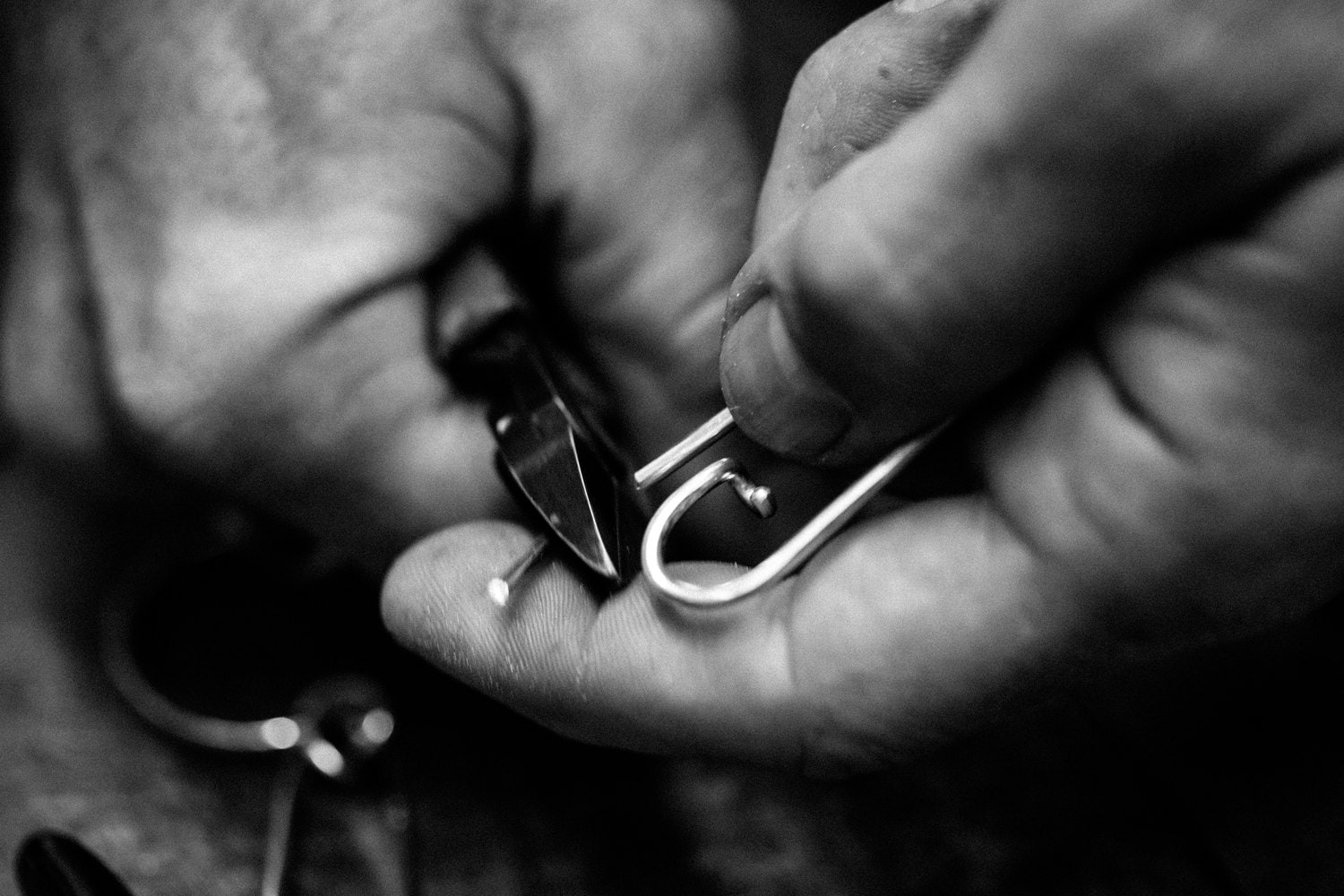
I am very grateful for that education. Most of our production process rests on what I learned at that school. It was a place where you learned to take an idea to a finish single-handed, with few tools. We were trained to make the idea in your head real. We are still doing exactly that.
So less a technique than an ideology you took on?
Honestly, I would rather not call it an ideology. I don't much care for ideologies. (To the interviewer, who apologises) There is no need to apologise — it is simply a personal preference of mine. I would call it an education.
After leaving school, why did you decide to start your own label?
By the time I finished school I already had a small studio and was working out of it. After that I worked for a fashion designer, who asked me to realise a number of pieces.
But it was purely technical work, with not one of my own ideas in it. Working as a maker, I realised that what I wanted out in the world were my ideas, not his — because he and I saw design and aesthetics differently.
I wanted to live the dream, and to realise what I pictured. So I thought I would make a small collection, go to Paris, show it, and see what happened.
Luckily, the right people responded. From that first season we were carried by genuinely good stores. I knew little about distribution back then, so I had no idea what that meant. Only later did I understand that they were all very good stores indeed.
Why did you choose WERKSTATT:MÜNCHEN as the name, rather than your own?
The name explains a little of what we are. WERKSTATT means workshop, and MÜNCHEN is my city. I am very fond of this city. I was born here, I grew up here, my family is here.
The name also carries a little of the idea of community over ego — because I am convinced that things can only be achieved as a team, never alone. Of course you need someone out in front. But behind anyone successful there is always a wonderful team. All of that is in the name WERKSTATT:MÜNCHEN.
And it signals that we are a craft-based label. We make with these hands. We do not have the work done somewhere abroad.
How did the collaboration with Ann Demeulemeester begin?
The first approach came from the brand's CEO, asking us to produce pieces for the accessories line. After that, Ann Demeulemeester herself went on to build the entire jewellery line with my help.
It was a special collaboration, and we suited each other very well. She brought a free imagination, and I understood her images and wishes and realised them. Some of the pieces we made together became staples, and are still in the collection today.
CHAPTER 03
“We are not Christmas trees” — putting meaning into jewellery
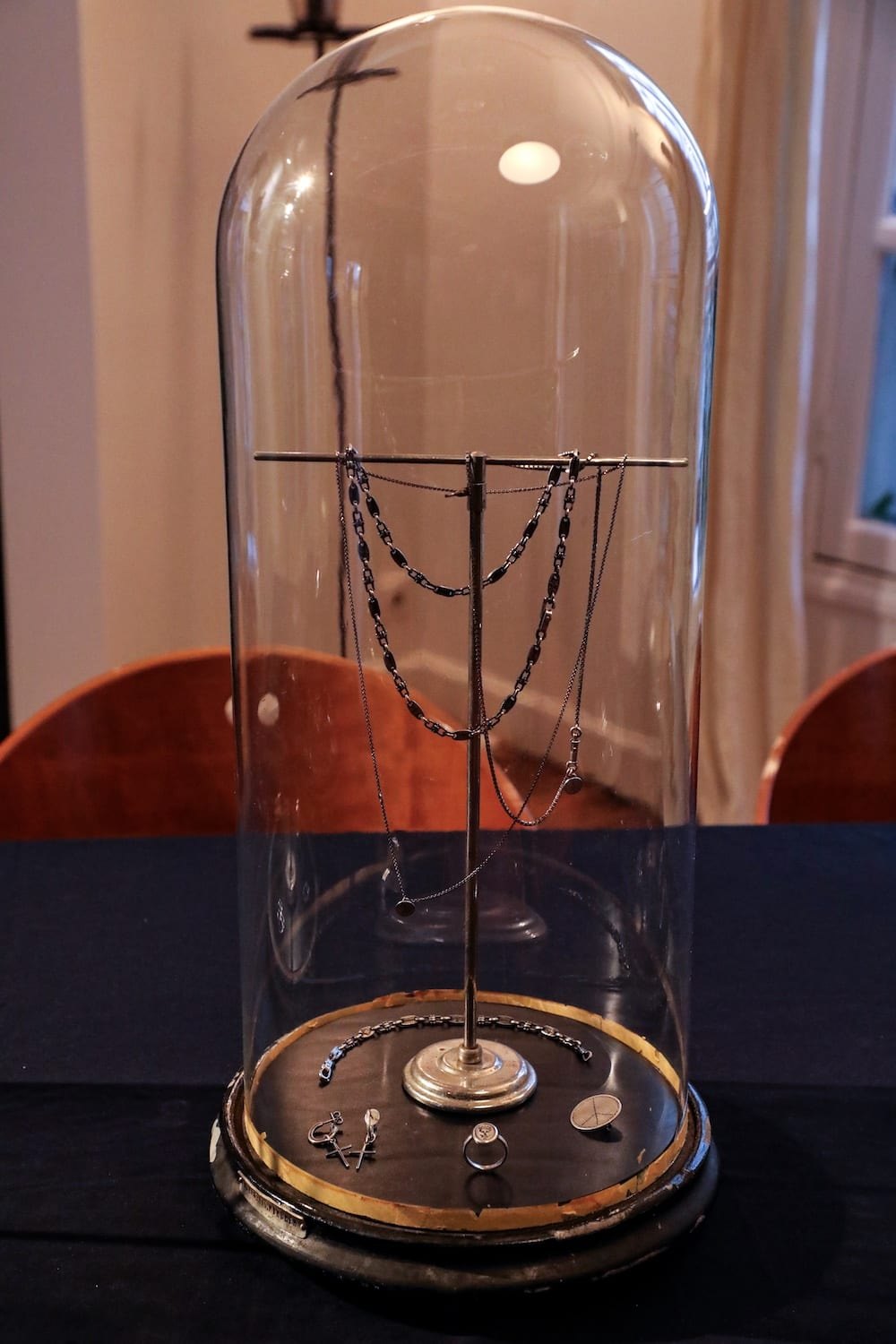
Are those three interests — music, philosophy, politics — still the foundation of your work? Has anything new joined them?
I am devoted to beauty. That is the first purpose. And beauty contains all of it.
The reason I make jewellery is to produce beauty, in a somewhat classical way — and to make people happy. Best of all is when both happen at once. Through a small accessory, a ring or whatever it may be, you set off the person's appearance and let them shine.
To that you add emotional value, because jewellery usually carries meaning. I do not believe in ornament. We are not Christmas trees.
Jewellery is also something handed over as a gift, with some purpose behind it. Think of a wedding ring. People are sometimes given a small necklace at birth. Not always, but more often than not it is bound up with emotional meaning.
That matters to me, and it is something I want to keep protecting. So each small piece of my jewellery carries meaning. Mere ornament is not what I am aiming at.
So the symbol, or the meaning, becomes bound up with the wearer's own life.
Or there is room left for the wearer to fill the meaning in themselves. Say a ring your brother gave you on a walk in the mountains. A very simple ring, with no need for any symbol on it. It still means something to that person.
What I attend to in that case is that it is properly and beautifully made: that the proportions are balanced, or that the tension is well judged. That it is simply a beautiful piece which sets off the person wearing it. That is what I am after.
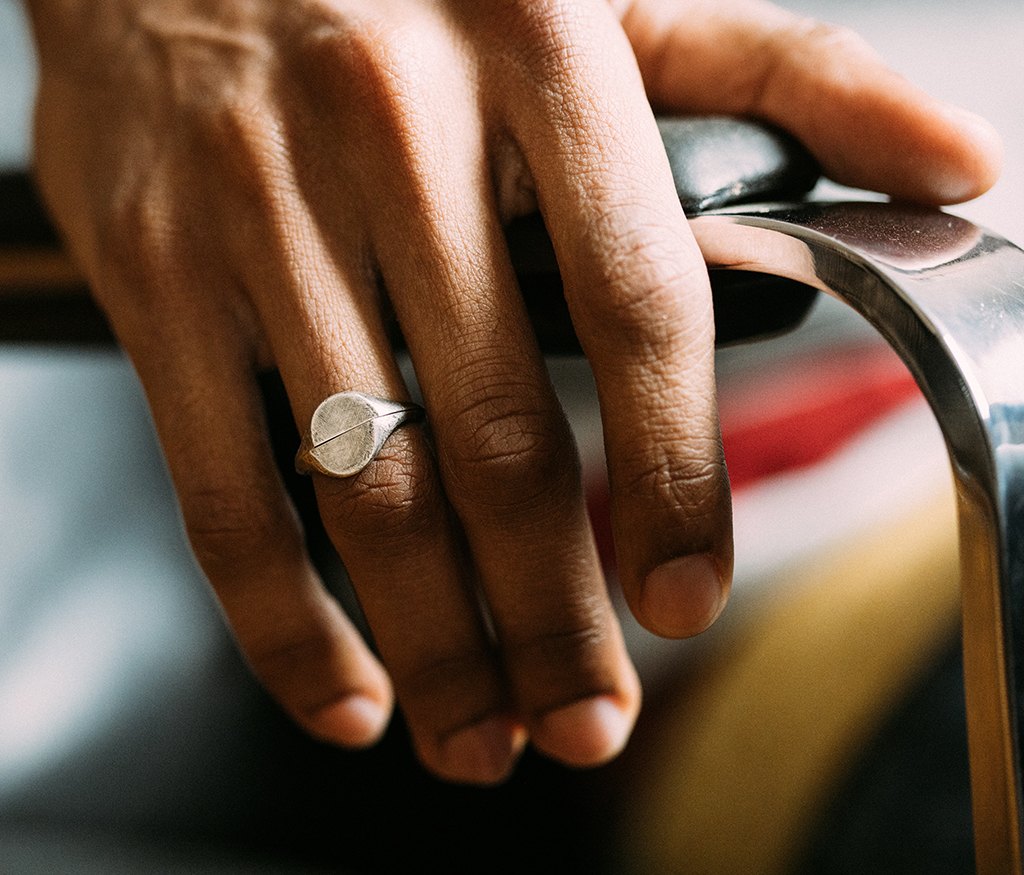
You have written that you want to make things passed down across generations. Is there anything you do at the design stage to that end?
I mentioned earlier that I also studied typography — the art of letters. That, in the end, teaches you a great deal about the balance of proportion and angle.
Letterforms are proportions and angles cultivated over many generations. Setting aside newer computer-made typefaces, when you look at traditional letterforms they appear naturally correct to the human eye.
What I am trying to do is find proportions that are naturally correct. I put a good deal of effort into that, because even working in fashion I want to make things of value. I do not want someone one day saying, this is so very 2000s, let's put it away.
Of course our collections have changed over the years. They have become lighter, more delicate. Even so, every piece has balanced proportions and, at the same time, carries a little tension. Lean too classical and it becomes boring. You have to find the right edge between tension and balance.
And then good craftsmanship. I think that is the foundation for being handed down across generations. As I said earlier, the beautiful thing about jewellery is that there is emotion inside the object. And then someone says: this ring is the one my grandfather wore every day, and now I have inherited it. That is where I want to arrive.
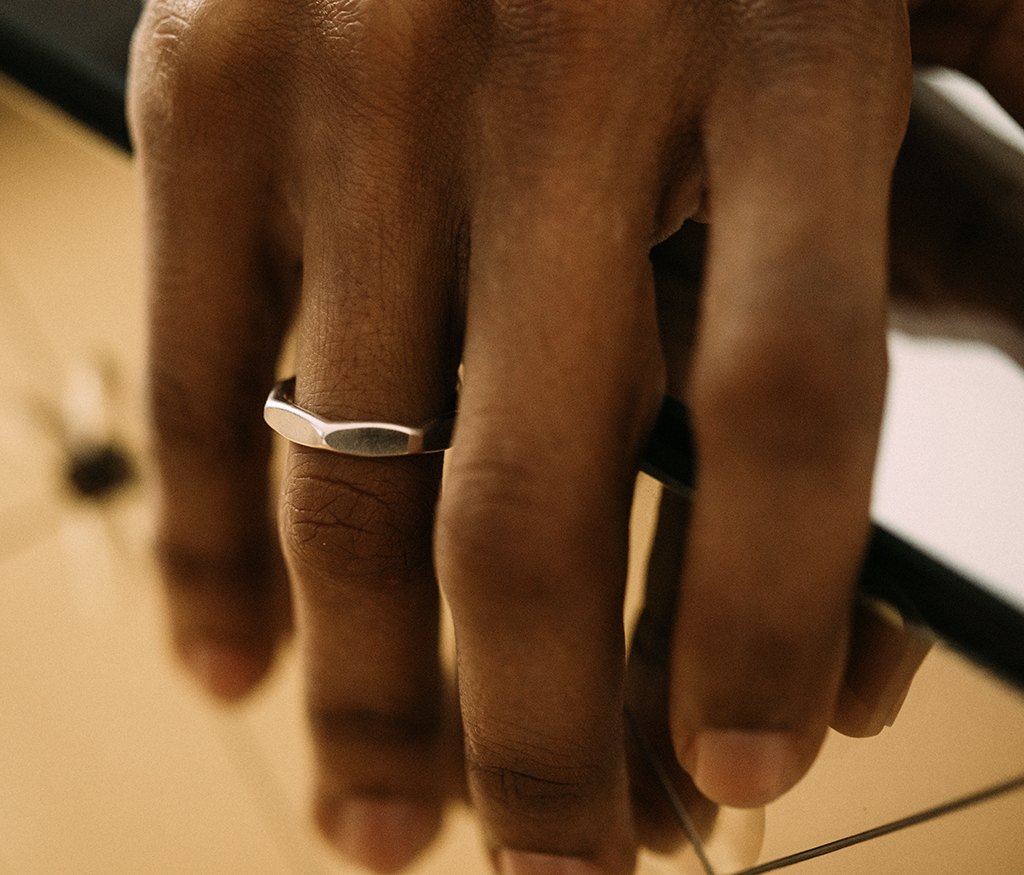
It strikes us that something passed from generation to generation is not something AI could make.
But AI helps anyone become an artist, because the technique is no longer required. That is not a bad thing.
AI will change our world, certainly. I am not negative about it. I don't use it myself, but I don't see it negatively in itself.
Until now you first had to acquire the technique — retouching a photograph, for instance. Now there is something you can hand that technical part to. Which means creative people may turn up among those who have never created before, or who never thought of themselves as creative. I think that is the good side of the opportunity AI brings.
CHAPTER 04
“The hammer's work is done by the weight of the hammer” — the old foundry, and the tools
We understand the workshop is a former bronze foundry at the back of an old courtyard. Why did you choose it?
It is a very old building. An old foundry, built in 1859 I believe. There is no shop; we sit in the middle of a courtyard. People do come and visit, though.
When we took it, the building had been left unused. Property in Munich is quite difficult — there is no space. And this place was very special in that it had not been renovated.
Germany has a culture of constantly improving and renovating things. That does not always end well, because sometimes you genuinely destroy the heritage. This place was in its original state, never once altered.
We were lucky the landlord let us have it. I really fought for this place — or rather than fought, I kept making offers in something close to a praying frame of mind, because I thought it was the perfect place. This is a workshop, which is exactly what the word WERKSTATT means. It conveys what we do very well.
On top of that, people in those days took care to fit a building to human needs. This was built before electric light existed, which is why it has a glass roof and windows. It is very natural, and I like that about it.
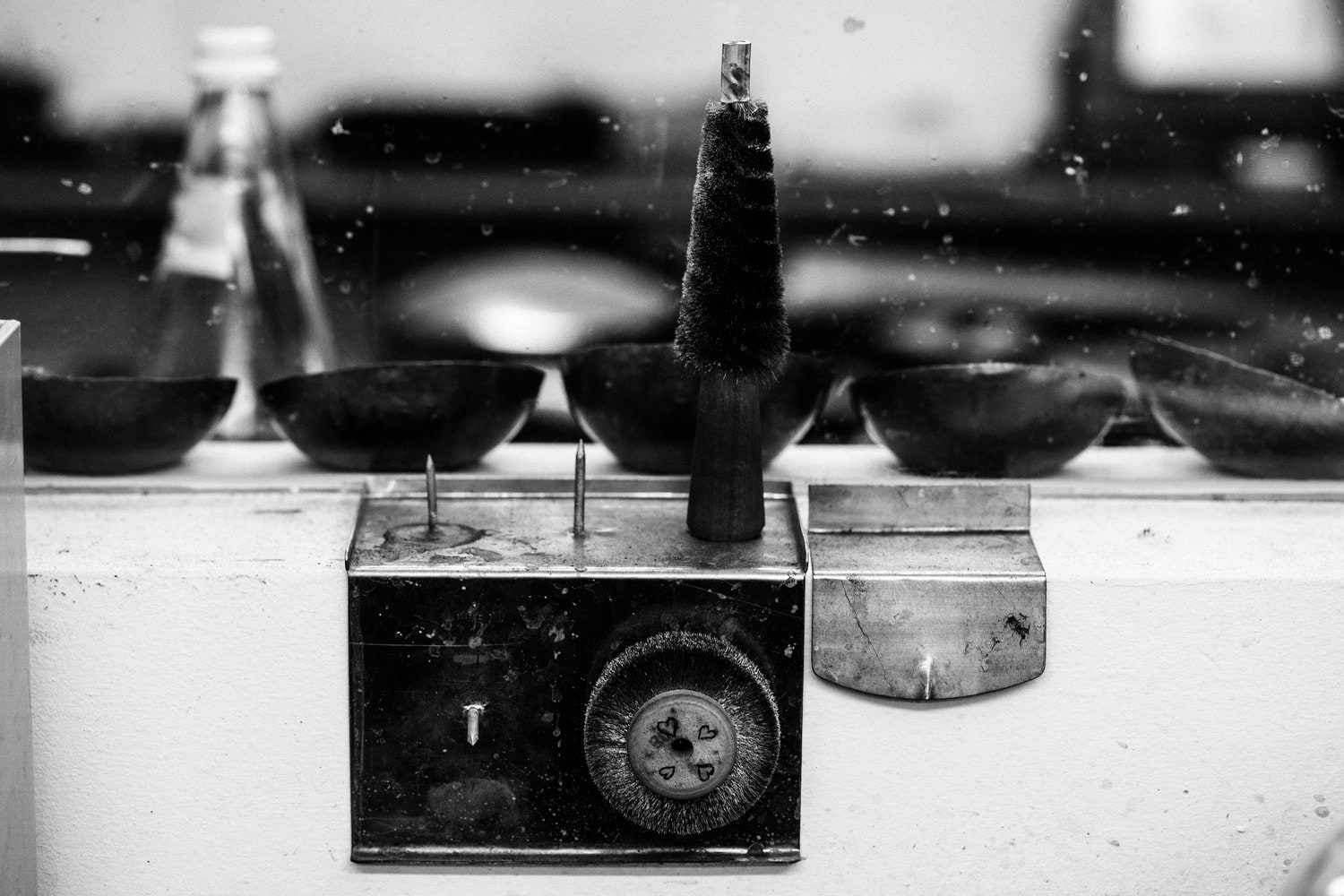
There is a corner of the workshop given over entirely to hammers. Do you actually use all of them?
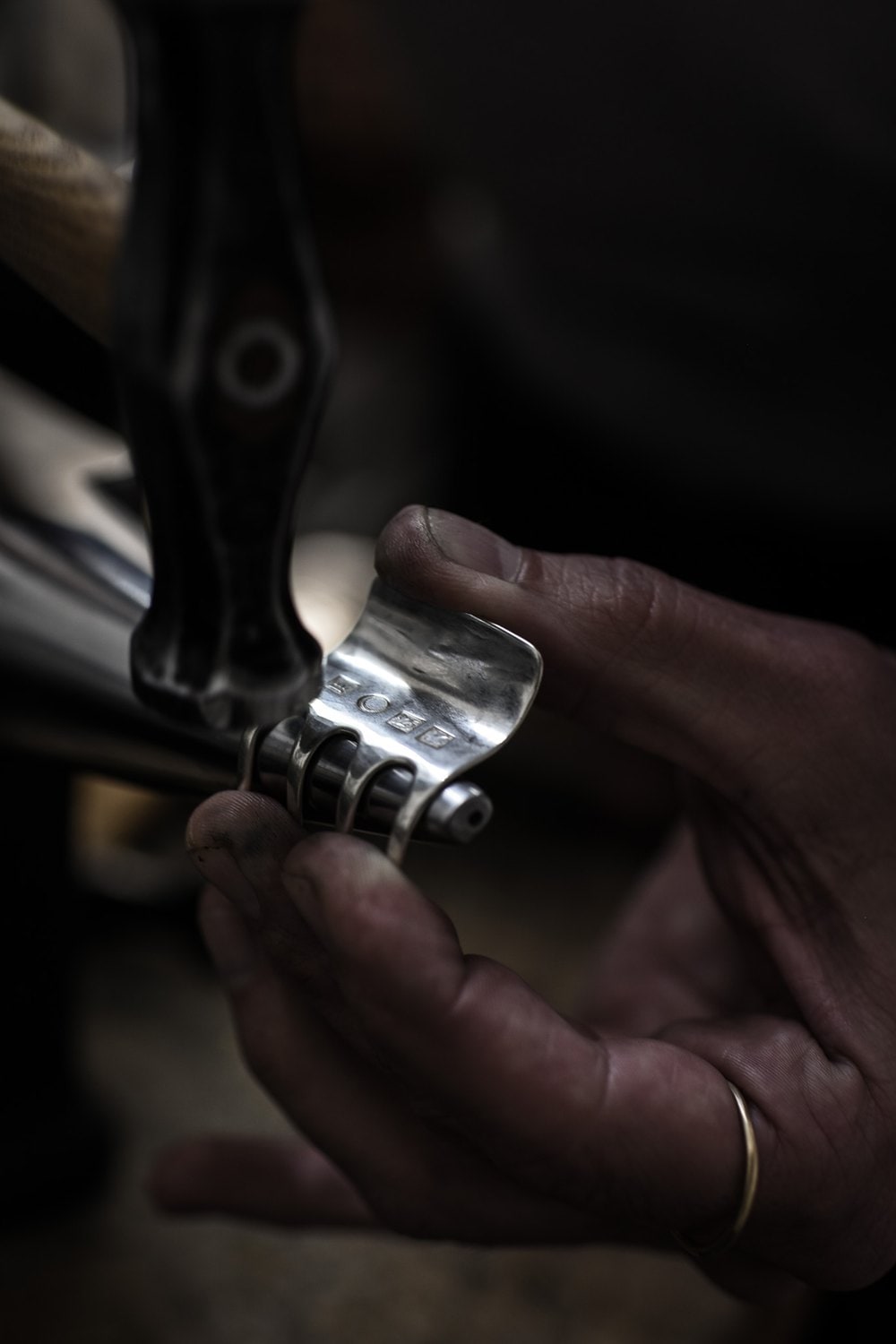
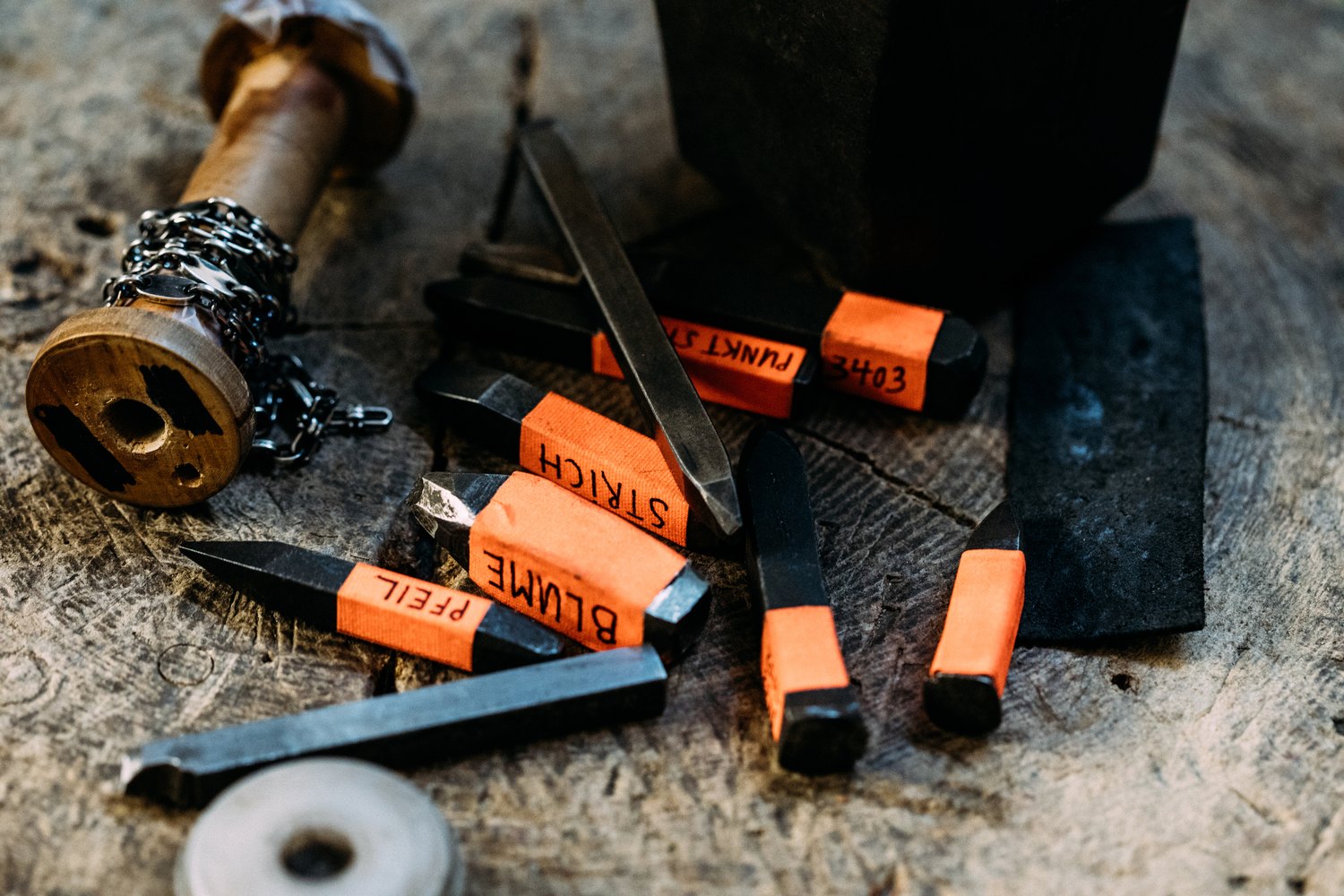
Yes, we work with them. Every single curve in the metal needs its own dedicated hammer, and its own dedicated stake [ed. note: the iron tool the metal is worked against when hammering], in order to finish it perfectly. If you want to hammer a curve like this, the hammer has to have a curve like this too.
Then there are differences in weight. Eighty grams, fifty, a hundred, two hundred and fifty, and so on. The hammer's work is done by the weight of the hammer. It is not necessarily done by the strength of your arm. And you find a rhythm. That is why you end up needing a great many different hammers.
I will confess I am also a great fan of hammers. So I may have gone a little far. You could probably do the work with fewer.
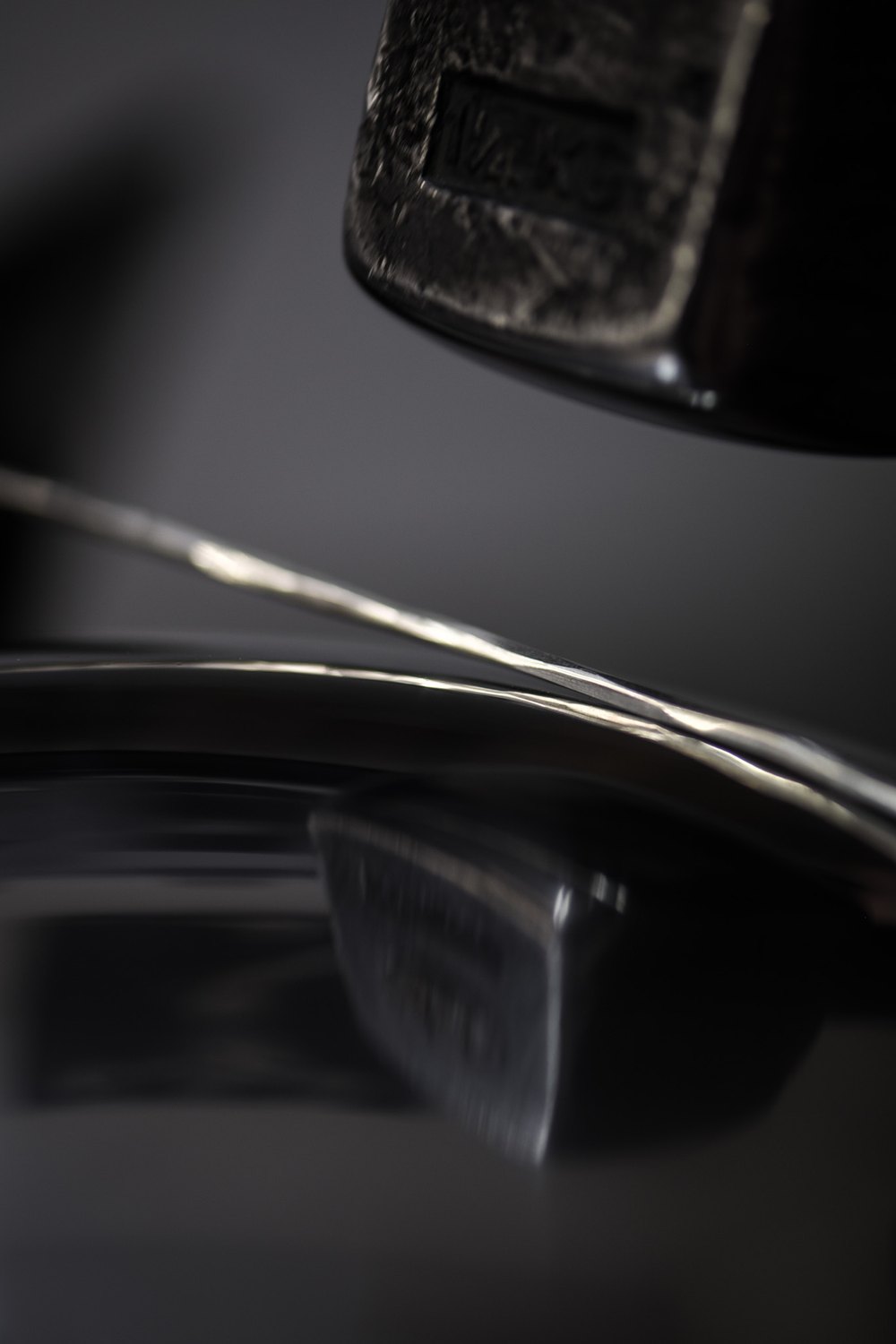
We hear some of your tools are a hundred years old. What is the oldest tool in the workshop?
A hammer, I think. A heavy one, 1.5 kilos, from the early 1900s. We used it on this collection too, to raise the facets. It takes a very strong strike, so the hammer has to be heavy.
I bought it from an elderly silversmith. It carries a stamp showing where it was made, and it was made in Munich. From that I would guess it dates from the 1910s or 20s.
Alongside his continued use of old tools, Lohmeyer had this to say about technical improvement.
“I am always looking for clever technical solutions. Honestly, it is to save time and to cut down the tedious work — and there is tedious work, you know. People three hundred years ago did not use them, but we use drills. We are constantly improving that side of things: finding a better abrasive paper, finding a new trick. But the basic craft has not changed.”
Which part of the work do you enjoy most?
Hammering. That is my passion.
What state are you in while you are hammering?
I like the rhythm, and the meditative quality of it. It is very relaxing and at the same time you have to be intensely focused. As with any technique, you need to hold your concentration.
I simply love it. I cannot explain it well. And hammering gives so much to how the piece looks. I even love the sound.
CHAPTER 05
“Whoever starts it finishes it” — how a single piece comes together
How many pairs of hands does one piece pass through?
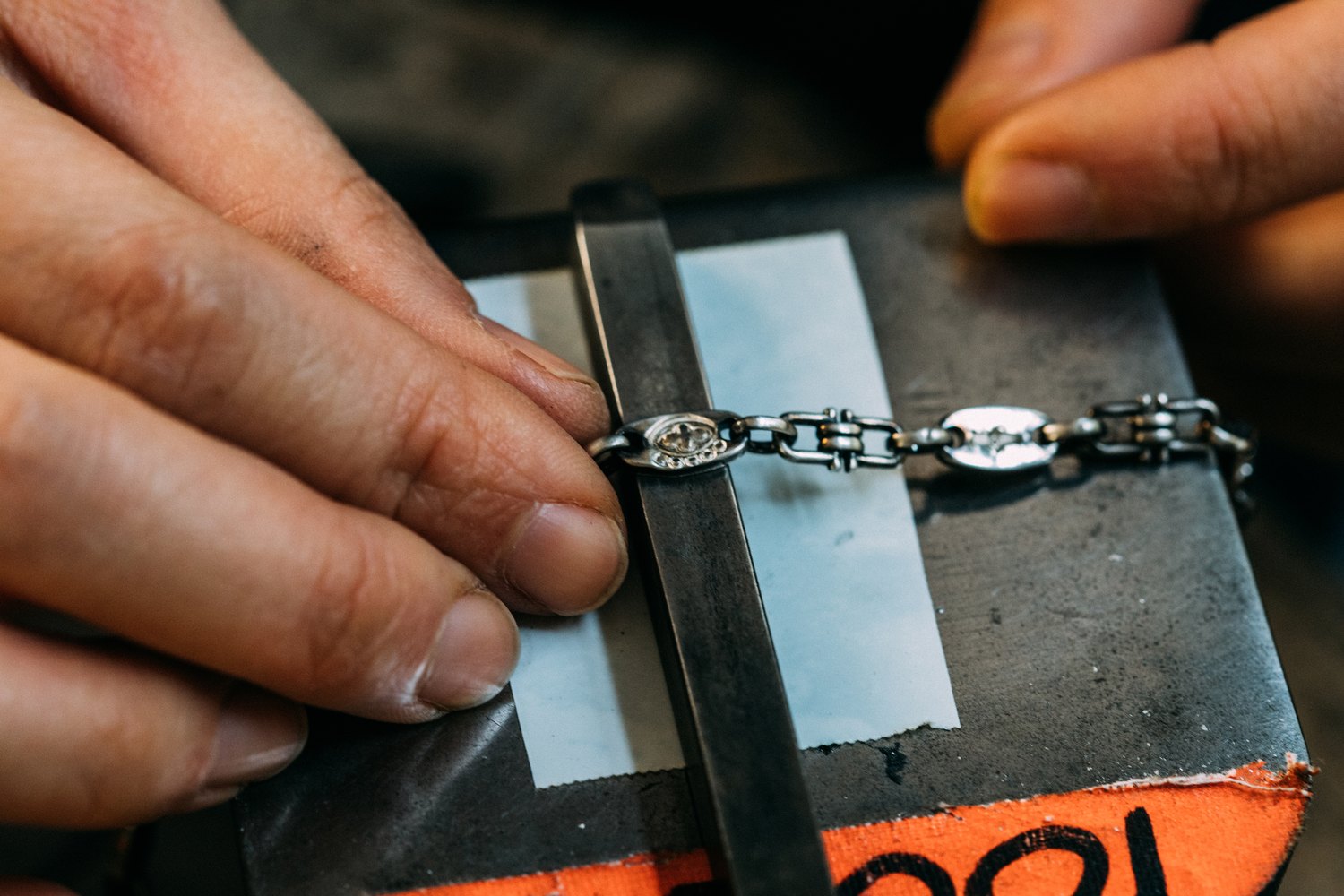
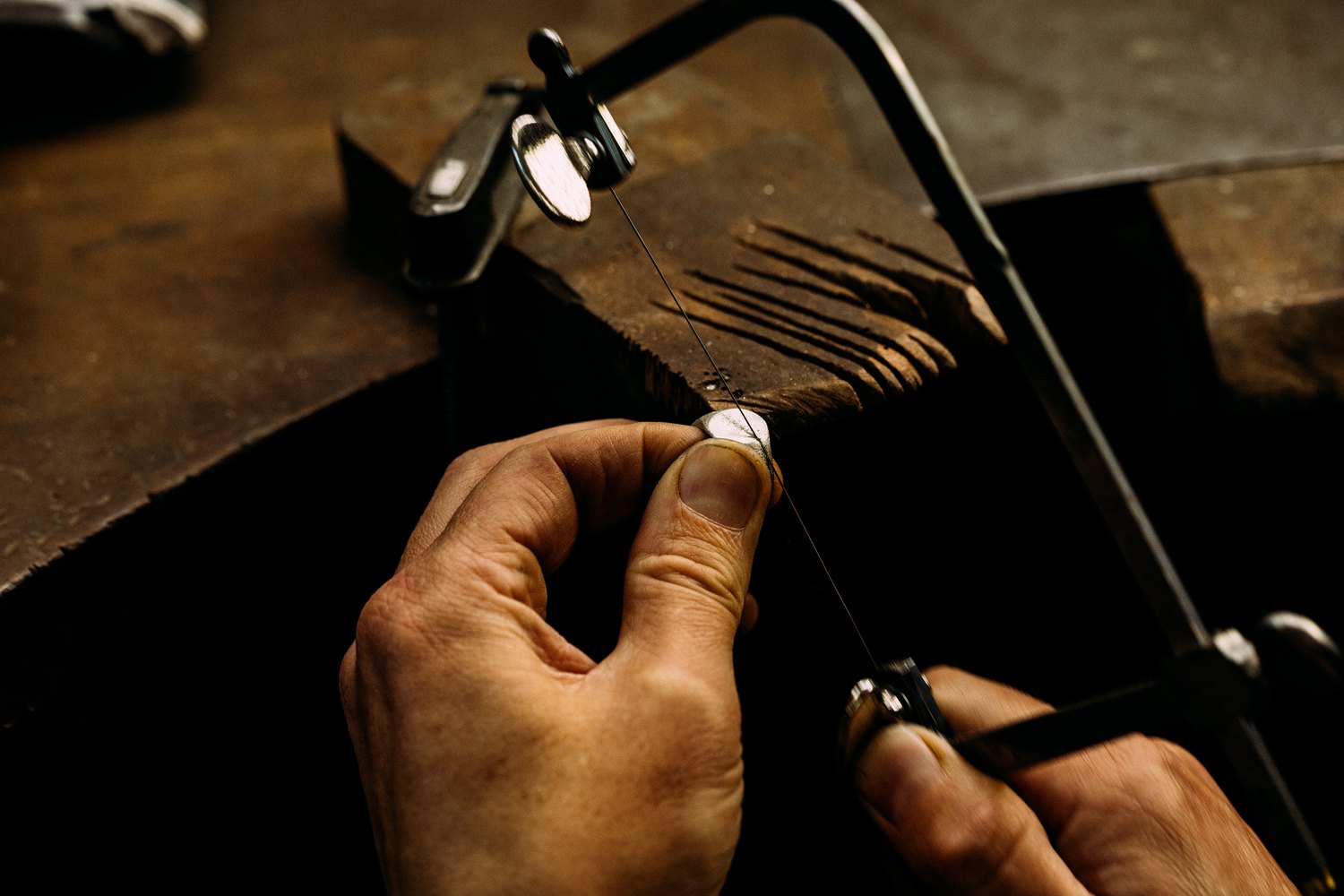
We follow the idea of holistic production: whoever starts a piece finishes that piece. I think it is more sustainable that way.
Capitalism has taught us it is better to divide the process, but I think that separates the heart from the piece. Whoever starts should finish. So it is usually two hands. After that, of course, it goes to someone who double-checks it.
The colouring — the oxidation stage [ed. note: a finish that darkens the surface of the silver] — is sometimes handled by someone else, because it is not a stage everyone wants to do. But fundamentally we are advocates of holistic production. It is more humane, and I think more of the maker's character shows in the piece.
Who is in the workshop at the moment?
Many of the people I work with have been beside me for 25 or 30 years. But to protect them individually, I would rather not go into much detail.
There is turnover too, which is natural. Some stay ten or fifteen years and then decide to take a different path. All the more so if they are creative — there comes a time when you want to stand alone and build your own dream. I understand that very well, and I support it. I have been blessed with good people, and I am grateful.
We understand you began with silver and leather, and that gold came later. Does your approach change with the material?
It does not. I give the same care to silver, to gold and to leather.
If there is a difference, it is this. With silver, if you cut it too short you can melt it down and start again. With leather, if you cut it too short, your only option is a smaller size.
And the only gold we use is 22 carat. Twenty-two carat has a softness close to silver's. We have developed both tools and techniques for our own means of expression, and those depend on how soft or hard the material is.
One more thing: I believe in true colour. We do no plating whatsoever. With our pieces, what you see is always the material's own colour.
That goes for gold especially. Eighteen carat is still all right, but Germany also has golds of lower purity, and the colour becomes very pale. I do not like that colour. I like the rich colour of real gold. Which is why we use 22 carat.
We hear you leave the small irregularities and unevenness in the finish rather than correcting them. How far do you let it go, and at what point do you correct?
It should look natural, and it should not look designed. That is how I think about it. You can sense whether something is natural or whether someone has worked at making it look natural. The latter is usually overdone, trying to look better than nature.
The ability to tell the difference comes from training your eye and your feel for it.
How do you judge pieces made by others in the workshop?
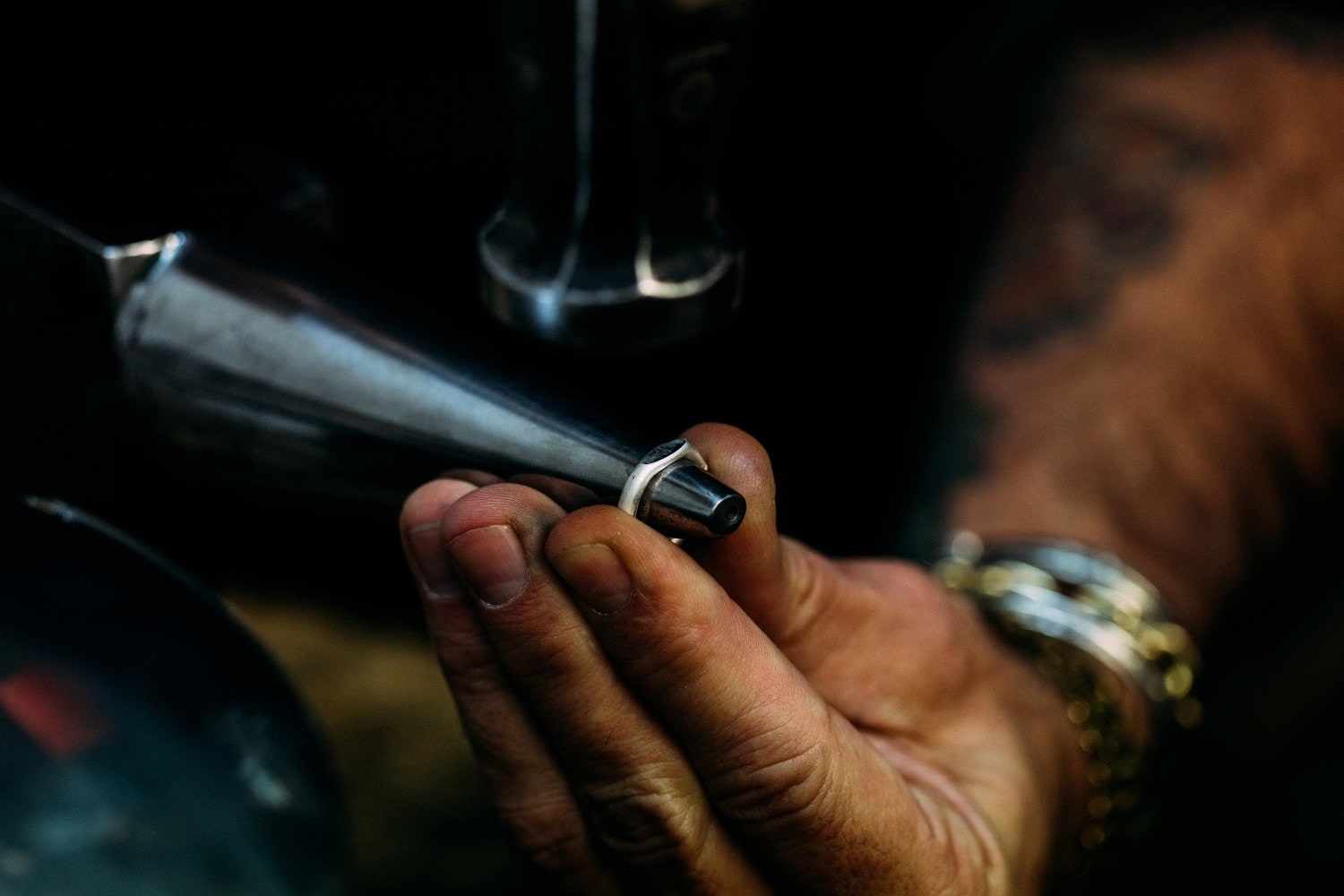
I try to show them how I made it and what matters. This sample has too many marks; this one has too few; I want you to work within this range. If I think there are still too few, I add one. Too many, I take one away. That is how we proceed. It is talking and talking and talking, but we get there.
This has changed a little, though. We used to have more freedom simply to make one beautiful piece. Some went to America, some to Japan, some to the Netherlands, and whatever landed in the store was the piece.
Now everyone works from a single photograph. So we have to come closer to that photograph, because we have no way of knowing how freely the person who finally receives it will look at it, or whether they will like our interpretation. It was better before — no, I should say it was different. The range within a piece was wider before.
In the thirty years you have kept the workshop going, when was the hardest time?
The lockdown period during the pandemic was probably the hardest. We did not know when it would end, or where it was heading.
Even so, as makers we could at least carry on working. But there was no telling how the economy would recover. Everything was uncertain, and the pressure was considerable.
What held me up was a strong conviction that things would certainly return to how they were. I felt it. So I kept telling myself: the only question left is when, so endure until that day.
CHAPTER 06
“Half a millimetre changes everything” — the UNITY collection
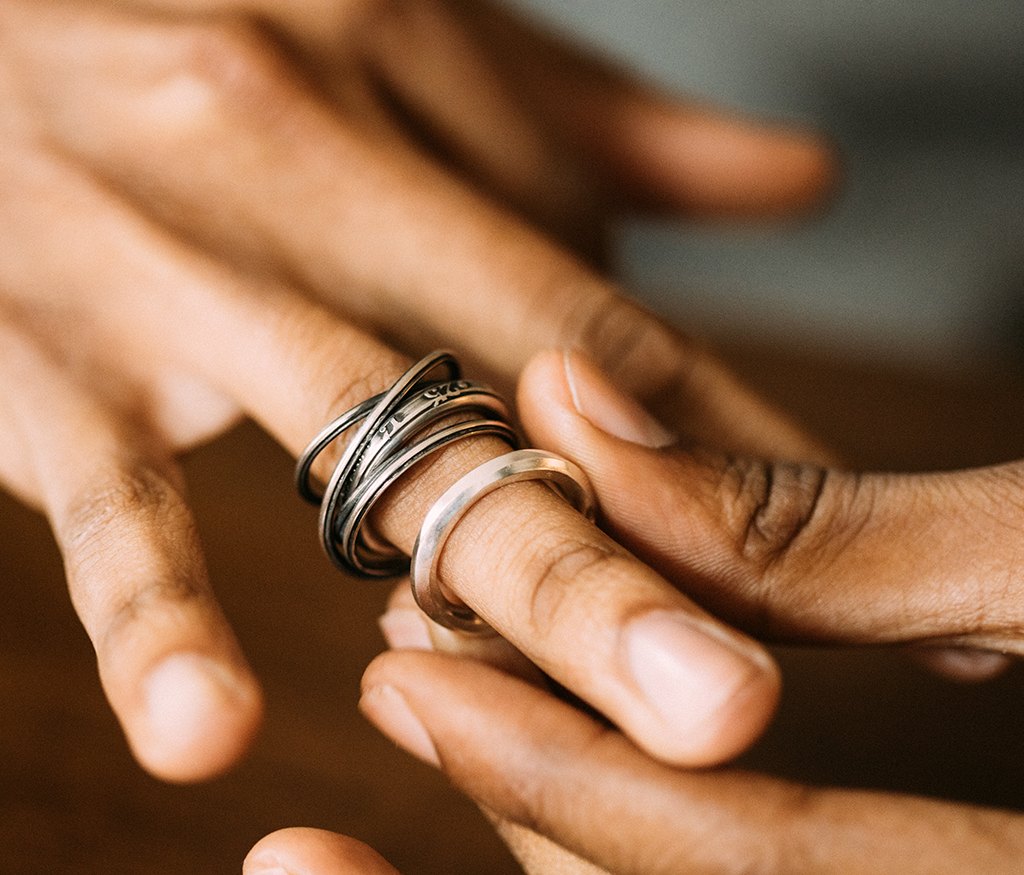
Why did you choose UNITY as the theme for this collection?
There are two sides to it. Originally it was a romantic idea: two individuals becoming one as a couple. That is unity.
Then a broader, more philosophical thought came into it: that as a society, we need more unity too. Algorithms have worked their way in and are gradually polarising and dividing society. I do not think that is a healthy direction.
What is needed is more understanding of one another, more dialogue, more coming together — meeting a little closer to the middle on what kind of society we want.
In many places in the world there are two poles. I do not think that is especially healthy, or peaceful. We should see each other as a human family. If we could accept the idea that everyone is a member of the human family, we ought to be able to avoid every conflict.
How did you give that theme form, piece by piece?
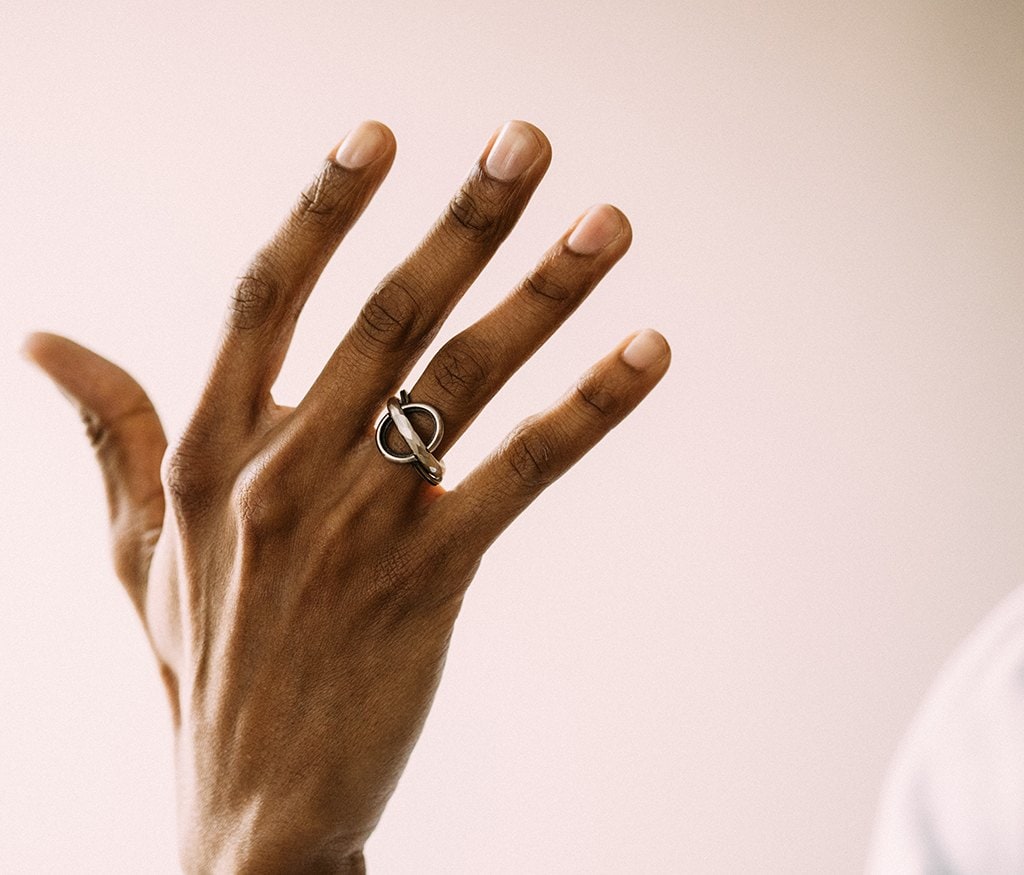
Take the ring M1261, for example. A signet ring [ed. note: a ring with a face for engraving a seal, or a bezel for setting a stone] with no stone in it, crossed by a hammered ring.
These are clearly two separate things. One is, in a sense, an unfinished signet ring: there is no stone, and we have even opened it up there. The other is a hammered ring with considerable volume. They have nothing in common.
We opened the signet ring and set the hammered ring into it. The two become one, and on the hand it turns into something genuinely singular and beautiful. Something entirely new comes into being. Separate them and neither is quite enough.
In this case one plus one comes to more than two. But the final sum is that one plus one makes one. It is a good example of how we gave the idea of unity form.
You have said that you don't sketch, but start working straight in metal. Was this season's theme settled before you began?
That may be a slightly misleading way of putting it. The theme always comes first.
And it is not accurate to say I do not sketch. I make something like notes. But I do not sketch the way Karl Lagerfeld did. It is not a matter of drawing a perfect sketch and then proceeding according to that plan.
I work very freely. There is an idea in my head and I try it out. I have to try it, because a small detail changes a great deal.
Our work is very minimal. At dimensions this small, half a millimetre can change everything. It is not something you can decide in advance.
You have a rough notion, you take a 1.5mm stock. You find it is slightly too thin. So you try 1.7mm. You also have to feel the weight, because it has to be comfortable to wear. That is how you approach the metal. That is my way of working. But the theme comes first.
Does anything change between the first prototype and the finished piece?
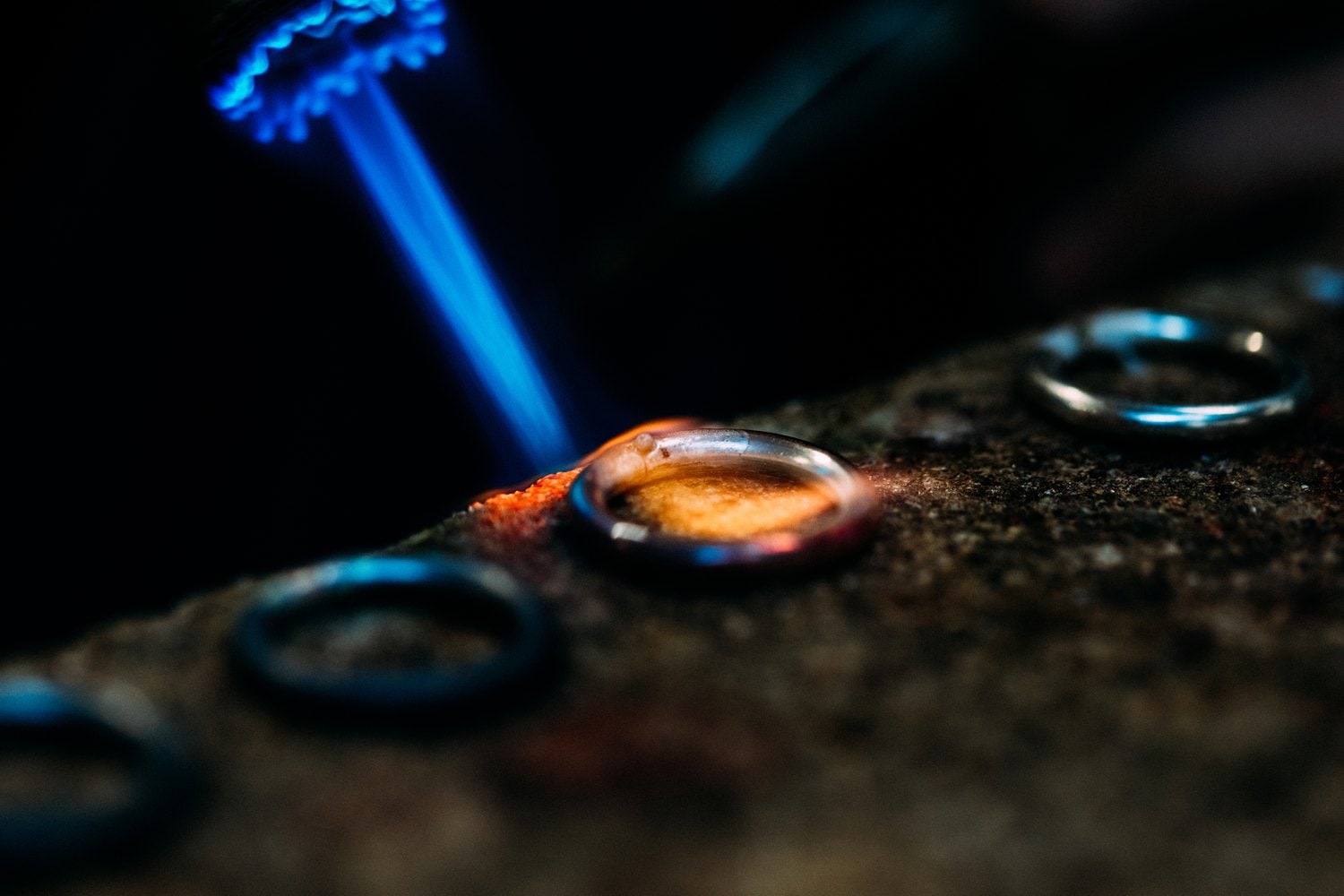
The first prototype is always very free work. It is not bound by size either. I make it roughly to fit me and check whether it looks good. The soldering is just joined — I don't spend time finishing it perfectly cleanly. It is rough.
The change begins from there. Once a prototype is confirmed as a production sample, the real work starts: translating it into five sizes. Every size has to be perfect dimensionally. Sometimes we adjust the dimensions slightly, because the span between XS and XL is very large.
And from that point on, every single piece gets the same love and the same labour.
What do you want the person wearing this collection to picture?
Two people embracing. On the small scale, a single pair of people. On the large scale, I would like them to imagine all the people a little — as John Lennon put it.
Which piece in this collection is your own favourite?
The ring I mentioned earlier, M1261. Because I had never seen anything like it before.
EPILOGUE
“Please hold on to that respect and that consideration”
Is there anything you want to try in the workshop next?
Of course there is. But for that you will have to see the next collection — I can't give it away now. Honestly, I am already at work on it. Otherwise the schedule would never hold.
Finally, is there anything you would like to say to your customers in Japan?
I visited Japan for the first time in the summer — 2024, I think. I called in at the stores as well. It is a very beautiful country. I did not have much time, but I love your culture.
If I may say so, there is more unity in Japan than in Europe or America. People agree with one another, show respect, and consider one another. I found that very beautiful, and I was genuinely comfortable in the middle of it.
People treat each other very politely, and everyone keeps to certain rules — not dropping litter in the street, for instance. That is a genuinely beautiful thing. Please hold on to that respect and that consideration.
EXPLORE THE COLLECTION