SUBLATIONS Designer Interview
“Clothes are finished by being worn”SUBLATIONS designer Taiki Nakamura on context and the details you never see
October 6, 2026
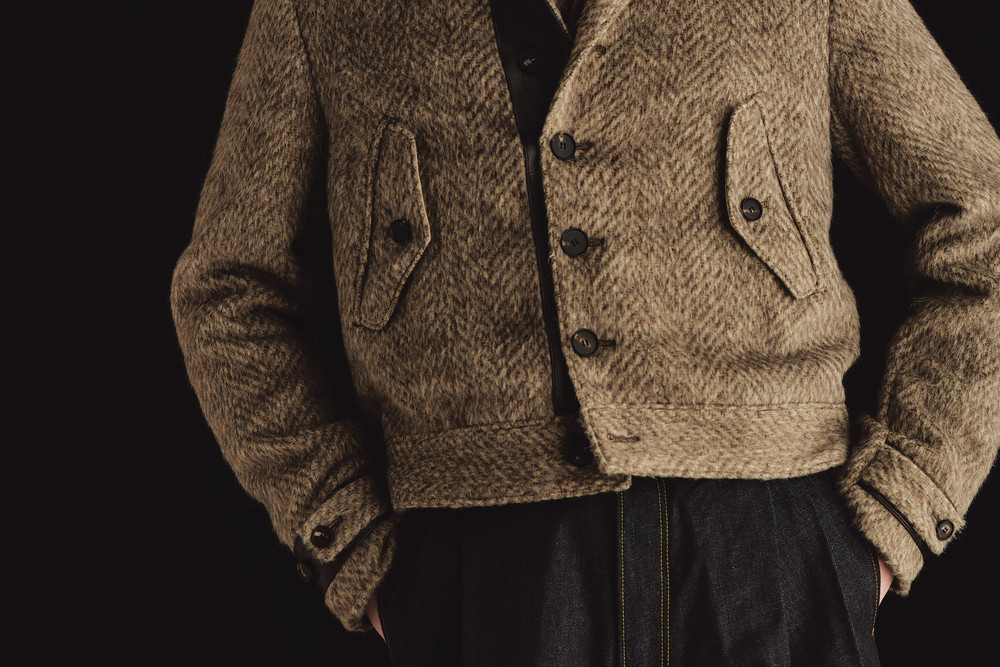
Our designer interviews go behind the work to explore how clothes are made and what their makers think about. This time we spoke to SUBLATIONS, which FASCINATE began carrying this fall and winter.
Taiki Nakamura oversees design and production, while Taisei Kanayama comes from PR. The two founded the label in 2020. Its name comes from the English translation of the German philosophical term Aufheben, bringing opposing elements together to make something new. The plural S reflects the two people making the clothes together. That same idea shapes how they develop each season’s theme.
When we saw the samples and finished pieces ahead of the interview, the sewing and fabric struck us first. Where does that quality come from? We spoke with Nakamura at length about how he started making clothes, how he chooses fabric, and what goes into the parts a wearer never sees. (Interviewed online, September 1, 2026.)
DESIGNER PROFILE
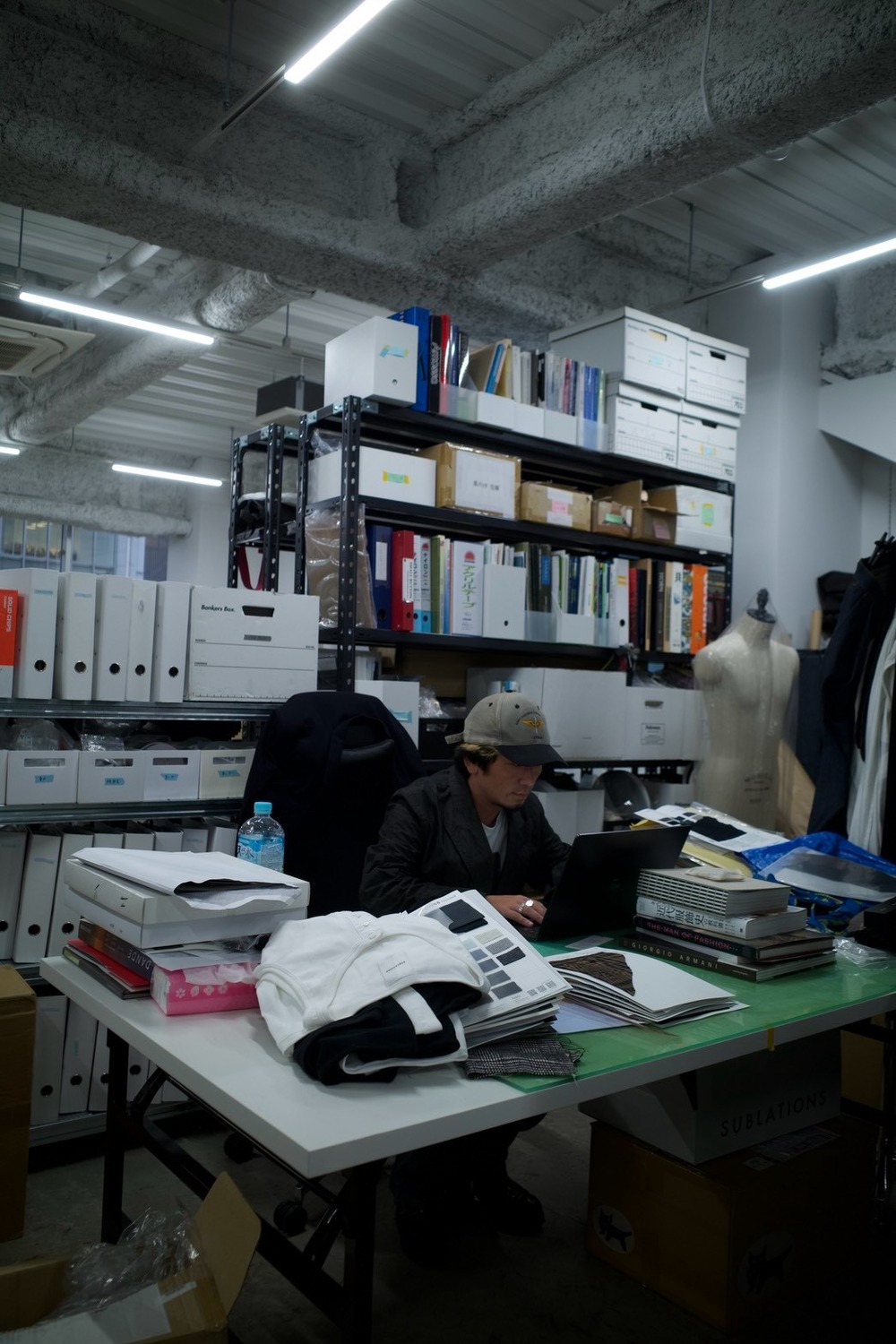
SUBLATIONS / Taiki Nakamura
Taiki Nakamura, who oversees design and production, founded SUBLATIONS with PR veteran Taisei Kanayama in 2020. The name adds a plural S to the English translation of Aufheben, the idea of bringing opposing elements together to make something new, to reflect the partnership.
Nakamura trained in tailoring and denim production. He pays close attention to fabric, stitching and the parts you never see. His idea that clothes are finished by being worn guides him in making pieces that develop with the wearer.
CONTENTSContents
CHAPTER 01
“I don’t want an uncool little brother” — From tailoring to denim
When did you become interested in making clothes?
It started when I entered high school. My sister said, “I don’t want an uncool little brother.” I had never been interested in clothes before. Once it dawned on me that I was uncool, I started looking into it in a hurry.
You were born in 1986, so that was around the time hip-hop was going mainstream.
Like everyone else, I went to buy a Lakers jersey, but the authentic ones were huge. I’m short, so I knew that style wasn’t for me. At the same time, I loved movies. The leads in Hollywood films wore clothes that fit closely or were true to size. That felt more like me, and it set the direction for the way I dress now.
There weren’t many places to buy menswear then, were there?
Very few. You might find a little section tucked away in a womenswear shop. I couldn’t find what I wanted in the places I could shop. My mother said, “If it doesn’t exist, why not make it?” She had apparently gone to night classes at a vocational school and offered to teach me. The first thing I wanted was a coat, so that’s where I started.
When it was almost finished, she said, “I’ve forgotten how to do the rest, so look it up yourself” (laughs). I realized I’d have to figure it out on my own. I bought books and taught myself to make clothes. That was around my first or second year of high school.
You went on to study at Bunka Fashion College at night. Was your first job with a tailor in Ginza?
Yes, Ginza Eikokuya. More precisely, I was assigned to the sewing team. Getting to sew when I was young taught me a great deal.
After that you managed adidas production at an OEM company, then moved to EDWIN.
I spent three years in planning and production when EDWIN’s office was still in Nippori. The department handled all aspects of making the product. EDWIN was excellent at training people in how things are made. Right after I joined, I lived in Akita through the winter for intensive training: a month at a sewing facility and another at a finishing plant. I got to experience denim production firsthand, from cutting and finishing through shipping. That is still invaluable to me.
From tailoring to denim. They’re worlds apart.
One of the senior sewers at the tailor said this, half out of envy of the denim industry: a suit is finished the moment the sewing is done, and the customer’s job is to keep it that way. You maintain the fit and brush the cloth. Denim is still unfinished when you sew it. It’s only finished once you’ve worn it down, it’s falling apart and the color has faded. “That’s what makes denim great,” he said. At the time I heard it as a gripe about work, but I found that difference in identity fascinating.
CHAPTER 02
“Bring opposing elements together to make something new” — Starting a label together
You met Kanayama at URBAN RESEARCH after leaving EDWIN, right?
That’s where we met. Kanayama was managing a store in Ishikawa. Instagram was still new and his following was growing, so they brought him to Tokyo to do corporate PR. Both of us wanted to start a label and were feeling restless at the company. We happened to get talking and realized we wanted the same thing. I came entirely from production, while he came from PR and could reach a new customer base. COVID had just hit, so we thought we’d sell made-to-order pieces online, still unusual at the time. That’s how SUBLATIONS began in 2020.
A background in both production and PR gives the label a strong foundation.
When I first spoke to Kanayama, I wondered if he wanted to start one of those influencer labels that were appearing at the time. I was a little wary. But he wanted to build a Japanese fashion label in its own right, one that could eventually show on a Paris runway. He had a clear vision. I also wanted to make clothes with a collection show in mind. I thought we could take a genuinely different approach together. So we set our expectations for quality high from the start.
Can you tell us about the name?
We wanted to live up to its meaning: bringing opposing elements together to make something new. I still think SUBLATIONS is a good name. In Japan, people shorten it to “Sabure,” which makes it memorable. I’m praising my own work here, but I’d love it if people called it Sabure in shops, too.
How do you decide when the two of you disagree?
Usually one of us gives a little and we talk it through. Once the pieces take shape and you see them together, you can usually tell what feels out of place. True to the name, two forces come together to make something new. In a sense, our back-and-forth is itself sublation.
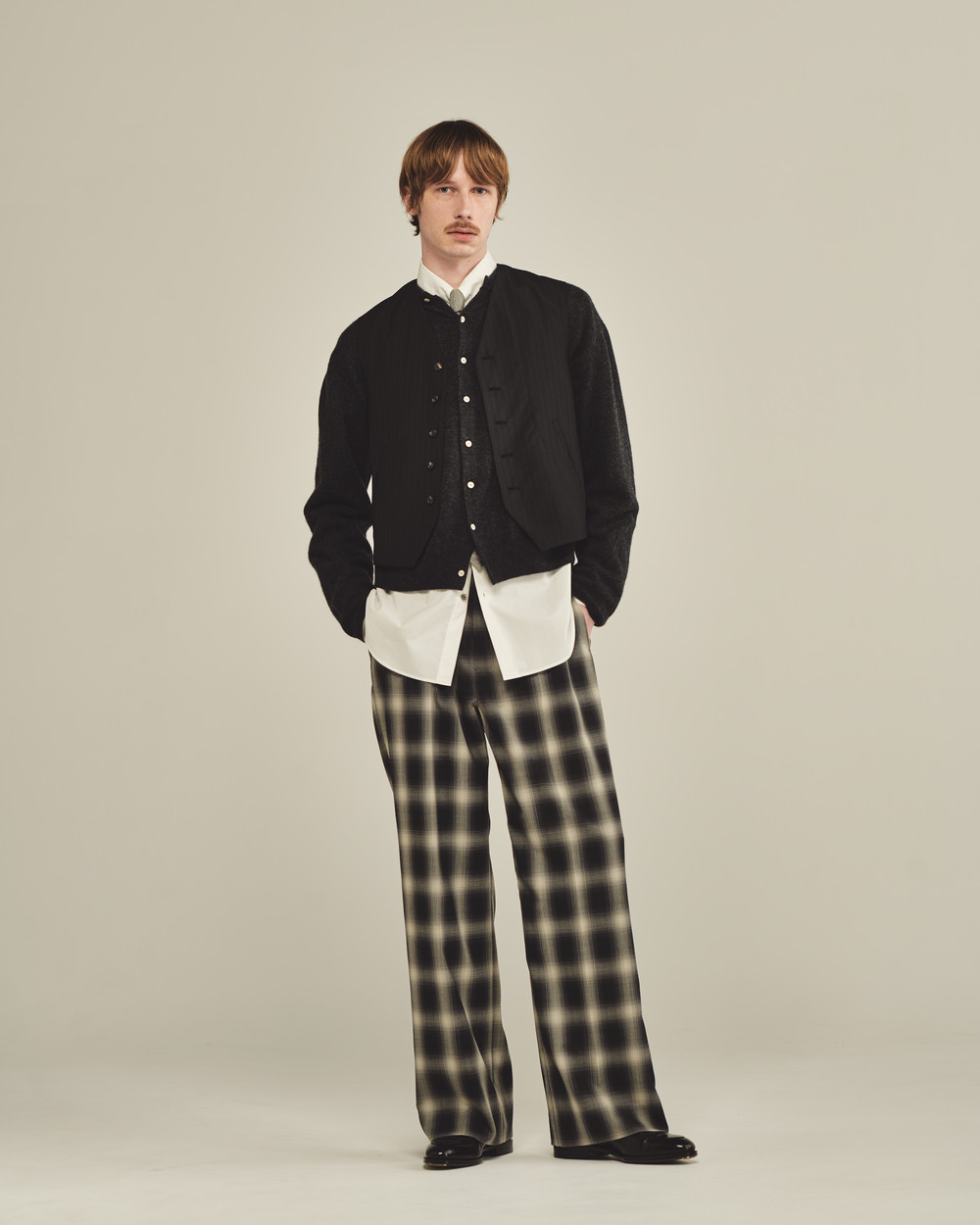
CHAPTER 03
“It starts to feel borrowed” — Context as the backbone of design
In a previous interview, you said you pay attention to context. What does context mean to you?
You could call it history, culture or genre. I felt this especially in tailoring. Each house has its own rules and each fitter has particular preferences. Why did they come to be that way? Why did a tailored jacket end up with such wide shoulders, for instance? Does it trace back to the British style Tommy Nutter popularized? Do you take it toward the zoot suit because you love the shape and the Black music associated with that counterculture? Does the shape come from an interest in motorcycle culture?
It matters whether you understand what came before and which parts of that history suit the garment’s shape. If those things don’t line up, it immediately feels borrowed. Even one pocket position or one color can do that. Military clothing might use olive, but American olive is greener, British olive is softer, and shades from communist countries lean gray. Once you have that context, you can decide where something fits in the theme. That’s when the design starts to have a backbone.
Does it matter to you whether customers pick up on that context?
They don’t have to. But there’s a pleasure in recognizing it when you do. The clothes I fell for had that kind of context, and I want to make clothes that belong in that company. It matters a lot to me.
Young people don’t read many magazines now. When I was getting into clothes, I bought two a month. I loved the black-and-white pages in Men’s Non-no, the pieces on military clothing history more than the styling pages. At the time, designers like Hedi Slimane linked each collection to music, and you’d see features on things like glam. I loved that.
You can feel those black-and-white pages in SUBLATIONS now.
With fewer people reading magazines, there are fewer chances to encounter that context. If we work it into SUBLATIONS as a hidden theme and someone wonders about a detail and goes to look it up, I’d be thrilled. I hope it can work like those black-and-white pages, giving people a way into the history behind the clothes.
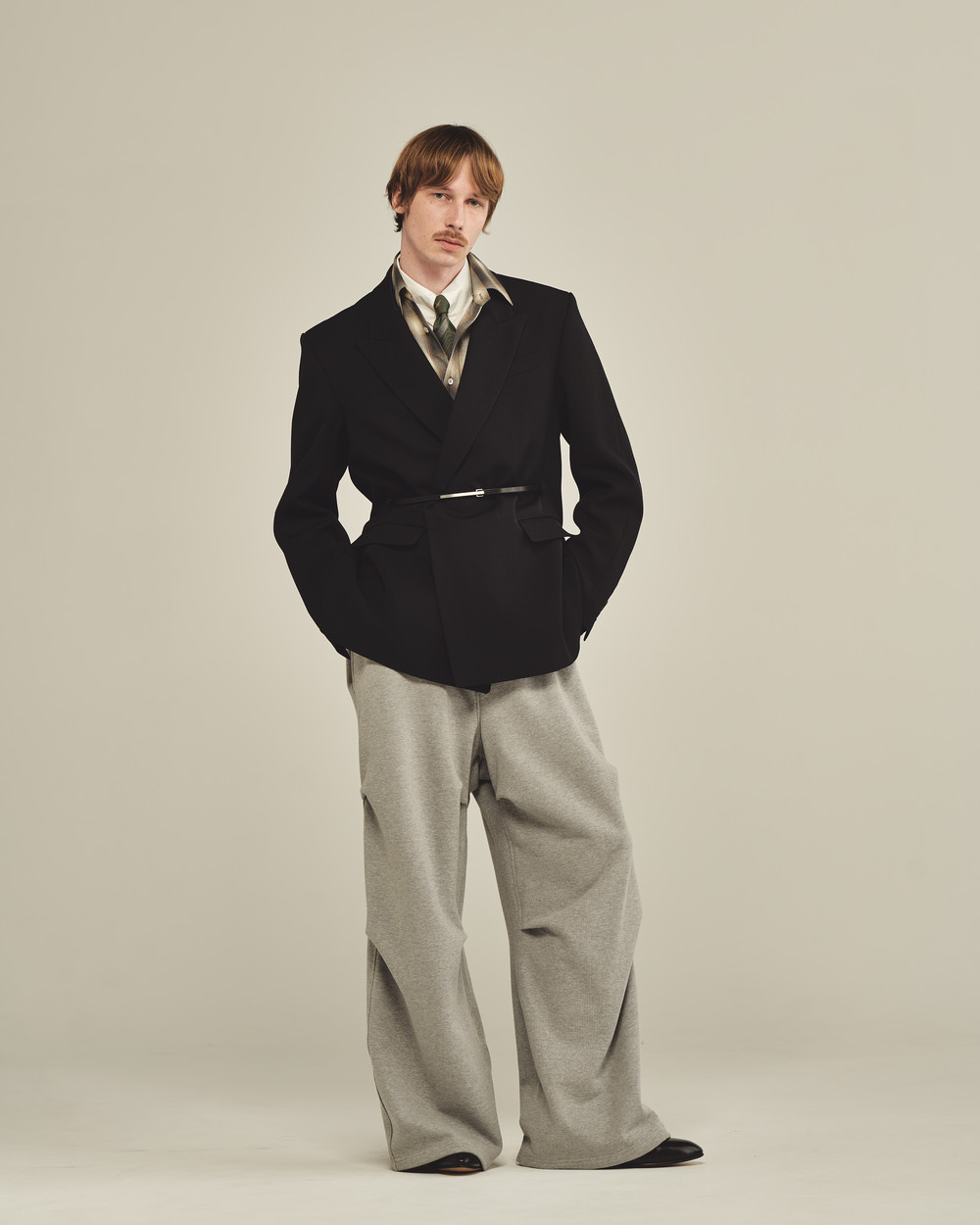
CHAPTER 04
“Fabric and sewing come first” — Choosing cloth and factories
We’ve seen both samples and finished pieces and found the quality high. Where do you look to judge quality?
Fabric first. When Kanayama and I first talked, we decided fabric and sewing would come first. We started during the pandemic, selling made-to-order directly to customers, so a large share of our business is online. When a garment arrives, the color might differ from what someone saw on screen, or the design and silhouette might feel different when they put it on. That’s hard to avoid. But when they touch it, I want their first thought to be, “This is really good fabric.”
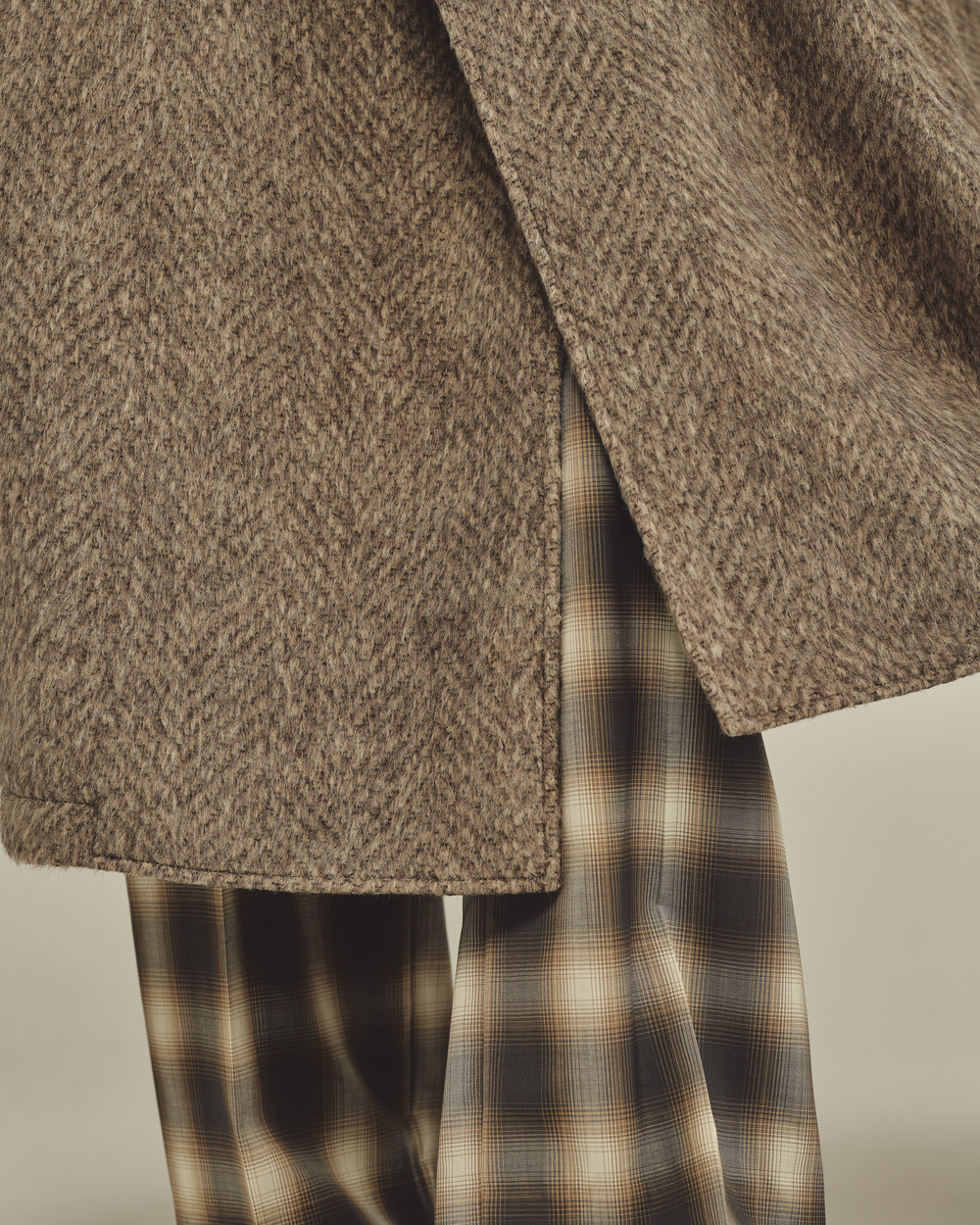
How do you choose your fabrics?
When we can, Kanayama and I go to trade shows together. Sometimes we work from a list of things to look for and gather swatches. Two weeks ago I went to Ichinomiya, in Bishu [a wool textile region spanning Aichi and Gifu], and came back with some picks.
Do you go directly to the textile regions?
We do, but I’d like to go much more often. Usually I still go to a fabric supplier’s office or they come to us. I’d like to visit more mills, speak with the people weaving the cloth and develop original fabrics with them. That’s something I want to work toward.
We’re able to select good cloth already. Every season there’s at least one wool fabric we’ve chosen with particular care. Then there’s our basic denim line and the fabrics that express the season’s theme.
Do you develop any fabrics yourselves?
The Rough Wool series for next spring and summer uses a fabric we developed. We also have a regular fabric we call Heavy Wool. Black is a standard color, and we commission the other colors as we go.
Do you produce in Japan?
For the most part, yes. We sometimes go to China for knitwear or when a construction is too complex for a particular factory to sew, but this season everything was made in Japan. I prefer to work with people I can communicate with closely. I want to see where they sew and speak with them before placing an order. You can’t tell what equipment they have or how often they press between sewing operations without going there. And quite simply, if I can do something for Japan’s GDP, I’d like to (laughs).
Is there a sewing standard you won’t compromise on?
It’s hard to name one top priority or minimum standard. Obvious problems like missed stitches aside, a good stitch depends on the finish you’re after. Factories in western Japan give you a good rougher finish; northern factories generally sew very cleanly. The result changes by region. I wouldn’t send something I want to look rough to a factory that specializes in a clean finish. I pay close attention to what each factory does well.
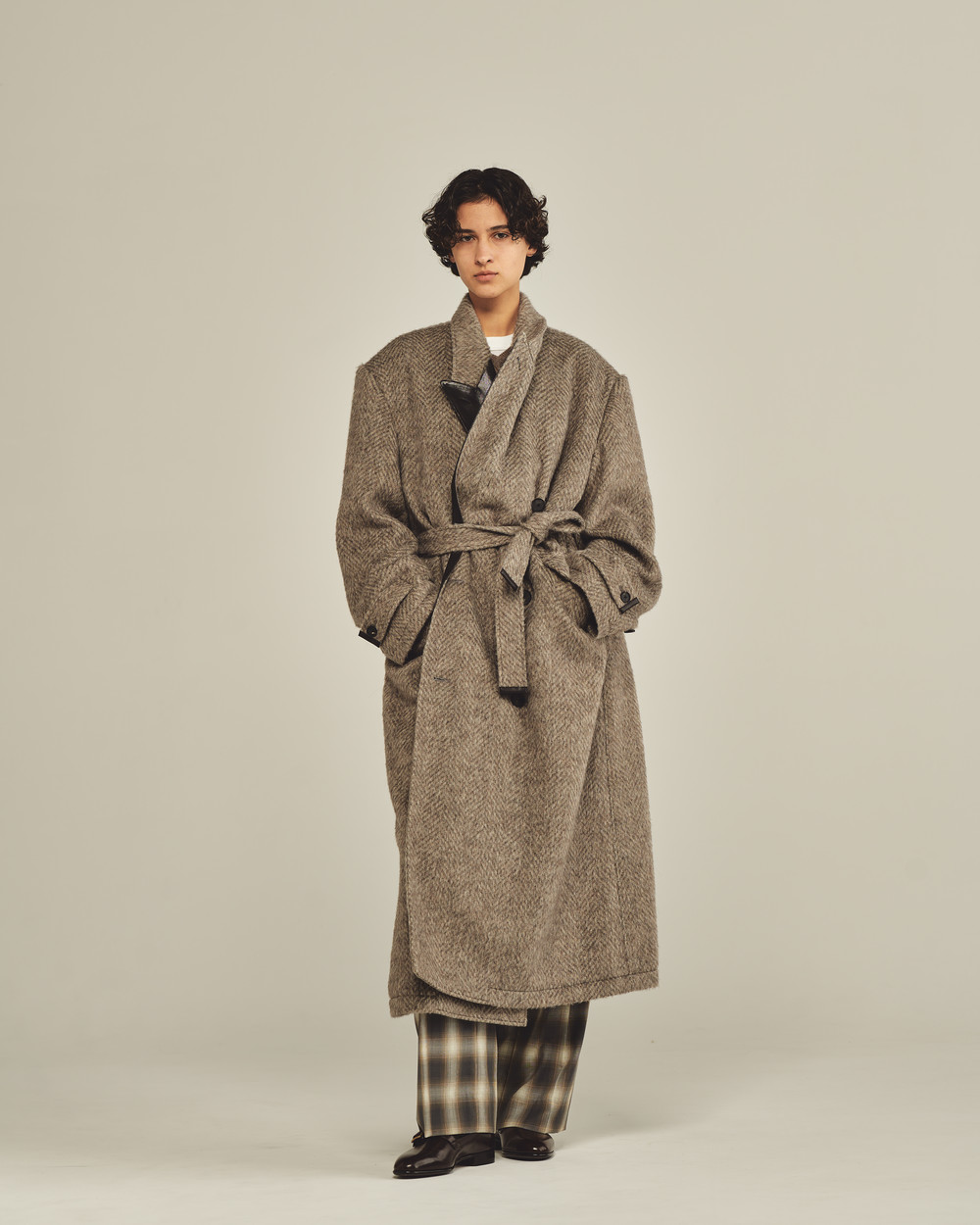
CHAPTER 05
“I don’t reach for plastic by default” — Buttons, shoulder pads and collar canvas
Are you particular about trims as well?
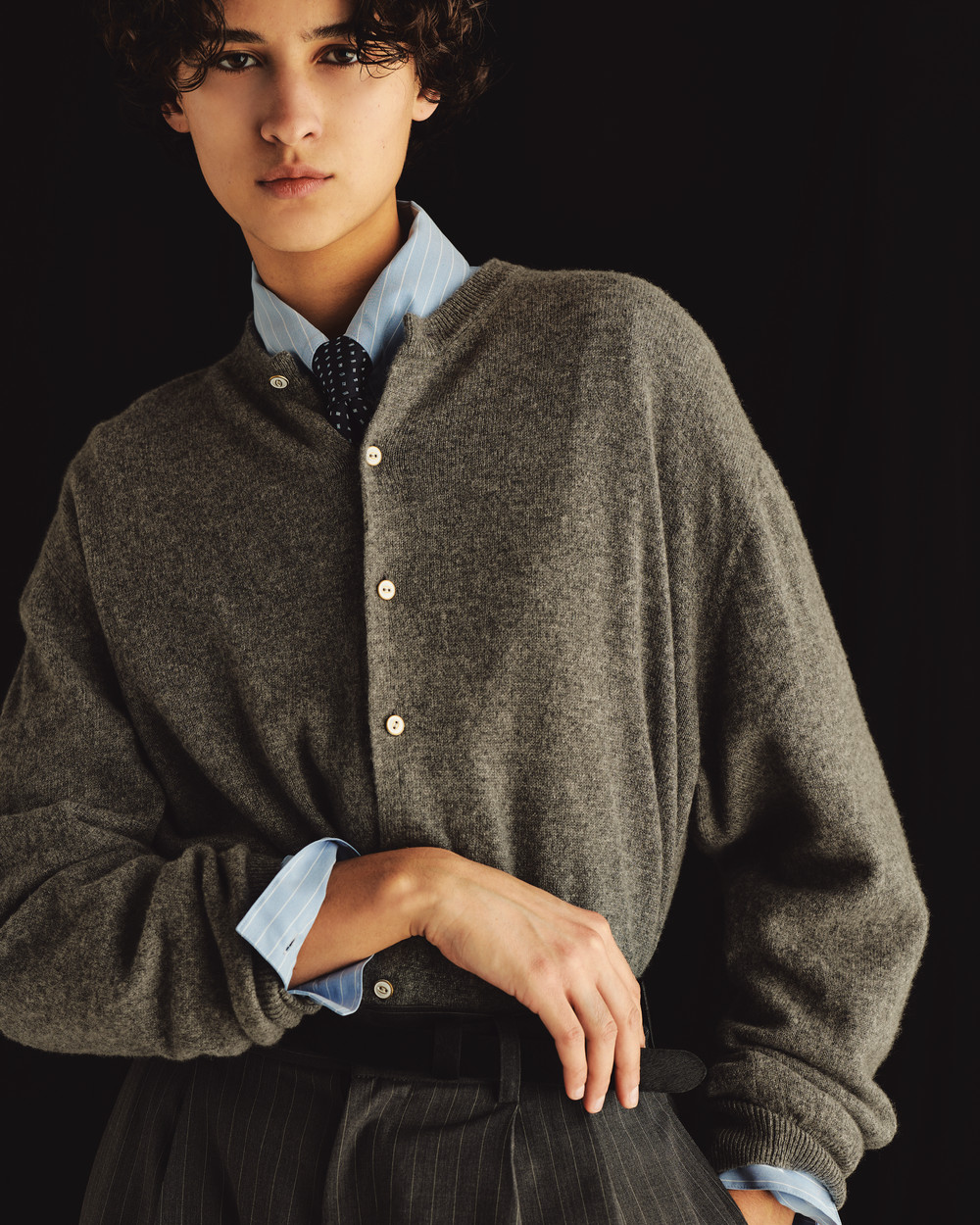
SUBLATIONS essentially uses only shell, buffalo horn or metal buttons, leaving aside things like plastic adjusters. It goes back to how a garment feels when it arrives. Trims are parts you touch every day when you wear it, and different materials actually feel like they have different temperatures. Plastic doesn’t have much of a sense of temperature or texture. Shell feels cool and crisp to the touch. Buffalo horn feels warm. Metal feels cool and hard.
That feel against the skin, in places you touch over and over, matters to people who love clothes. Trims are part of the quality. Some cost ten times as much or more, but I try never to reach for plastic by default.
Where do you put in extra work that the wearer can’t see?
Shoulder pads are an easy example. I buy them from a tailoring supplier I’ve known since my Eikokuya days. I go there and talk to the craftspeople. What sets them apart is that they use natural materials and stitch them by hand. The pads age along with the outer cloth.
Synthetic pads can collapse, or they can hold their shape so well that the garment softens and settles onto your body while the shoulders stay stiff. Pads made with natural materials settle onto the body along with the outer cloth. It’s a tiny difference, and how you care for the garment also matters, but it’s something I’m particular about.
Where else?
The collar canvas. We don’t use it every season, but we sometimes put a stiffened hemp canvas in the upper collar. It’s shaped with an iron and sewn in, without fusing. I once took apart a suit from an overseas fashion house and found a polyester collar interlining. I think we might have them beat on that one part of the upper collar (laughs). It’s all stuff you don’t see.
You make the clothes with years of wear in mind.
Clothes are finished by being worn. I’d like ours to be that kind of label.
CHAPTER 06
“Something that looks beautiful the instant it’s put on” — How he judges a silhouette
Is there a rule you always follow for a SUBLATIONS silhouette?
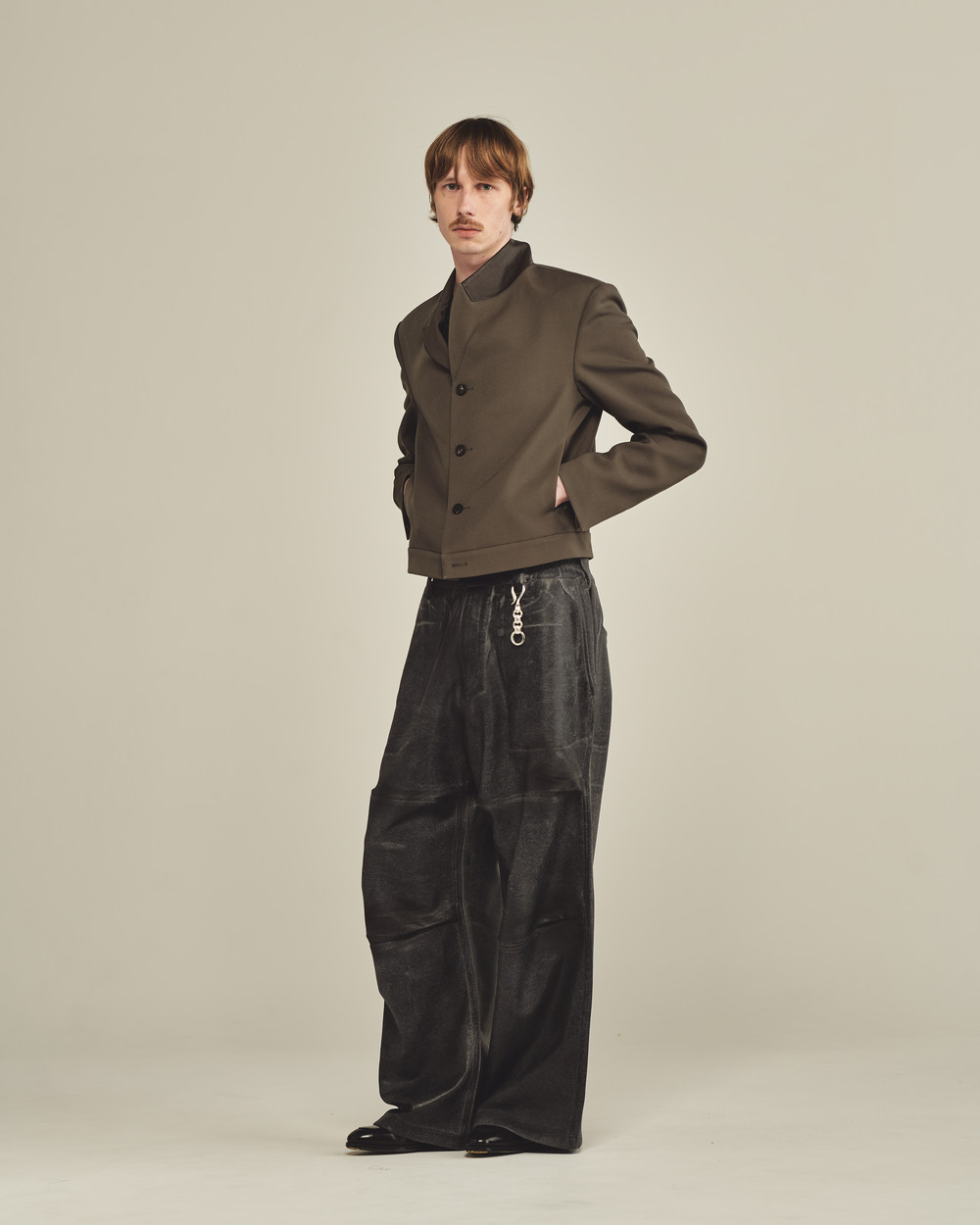
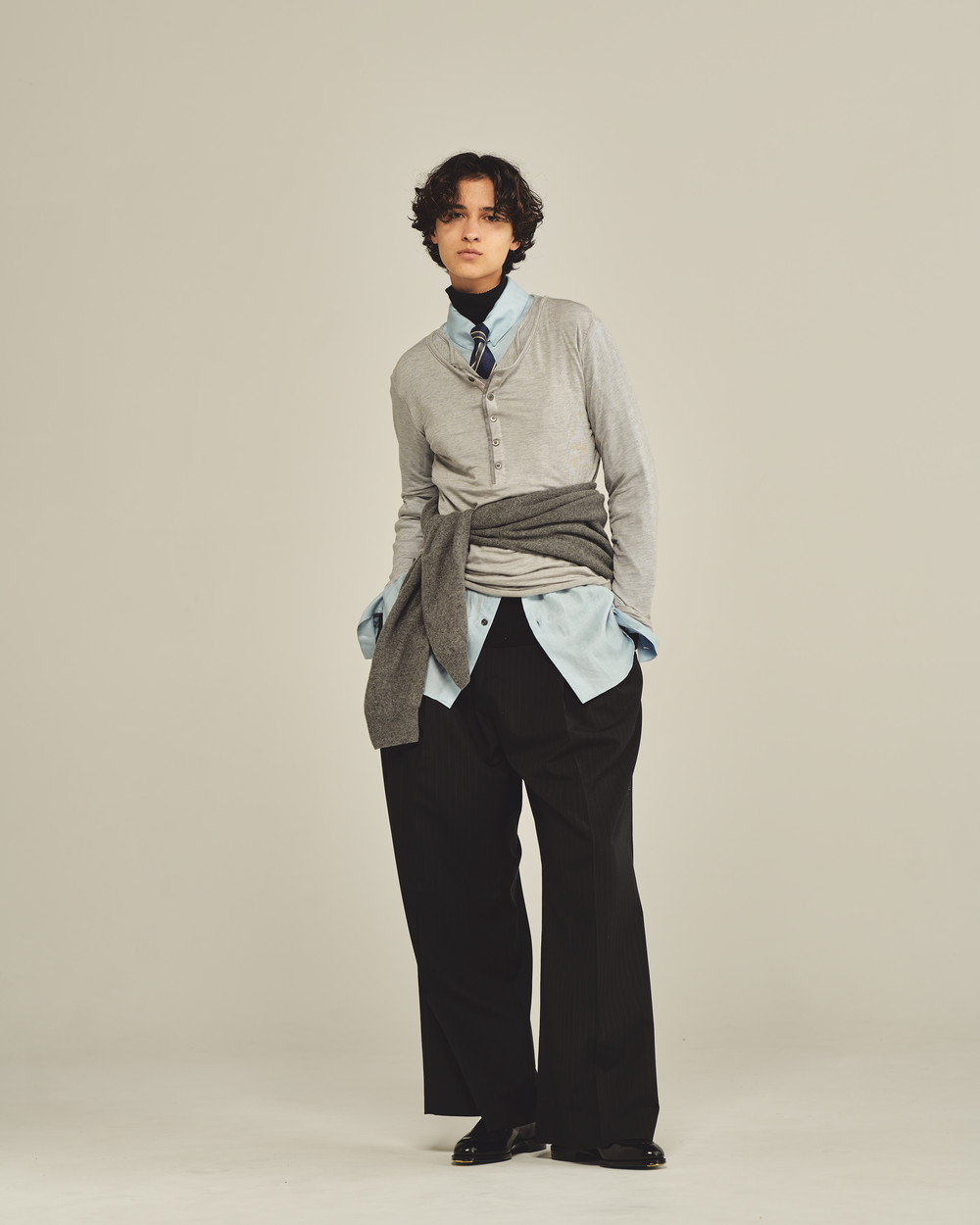
With men’s trousers, the seat, or the backside as I call it, is important. I think a flatter, European-looking seat is the coolest. Whether it’s wide trousers or jeans, I cut it to sit flat across the back.
So you want a clean line from behind?
Especially at the seat. Tops vary more with the season and the fabric, including things like the armhole that directly affect comfort. One of my favorite tailoring pattern details is the gorge line [the seam where the upper collar meets the lapel]. I pay close attention to the height and angle of the notch and adjust it over and over. It can change the whole look of a tailored jacket.
Do you work to the nearest millimeter?
I generally avoid saying that. Honestly, one or two millimeters can be within the margin of error. But the height of the gorge really is sensitive. Its height and angle change the whole look. I think a slightly low gorge without too steep an angle is characteristic of SUBLATIONS. Another thing is whether you press the shoulder seam allowance toward the sleeve or the body. That alone can make the shoulder look crisp or soft. We consider which way to go carefully each season.
What do you look at first when a sample comes in?
When it arrives, Kanayama usually puts it on and I look at it from the outside. He’ll tell me straight away how it feels and what impression it makes. I look at the balance of the piece. What you see in a mirror is different from what you notice while wearing it. That’s another advantage of working as a pair.
What might you notice about a silhouette?
At a previous job I watched trousers become more and more average as a group tried them on and shared feedback. As ease of movement took priority, more and more room was added at the seat in the name of mobility. To my eye, the silhouette lost what made it fashion. I really disliked that process.
What kind of silhouette do you aim for instead?
As with some overseas labels, I’m happy if a piece can look extraordinary on someone with the right proportions. It should look beautiful the moment they put it on. I don’t mind asking the wearer to meet the garment halfway if it doesn’t suit their body. That’s how those overseas brands get such striking silhouettes. Kanayama has great proportions and long legs. When we cut something to look its best on him, I think it gives us a particularly beautiful silhouette for a Japanese wearer. That’s a real strength of SUBLATIONS.
CHAPTER 07
“I pick a film as a hidden theme each season” — GENTLEMEN WILD ONE
Each season you pair two opposing words. How did you arrive at GENTLEMEN WILD ONE?
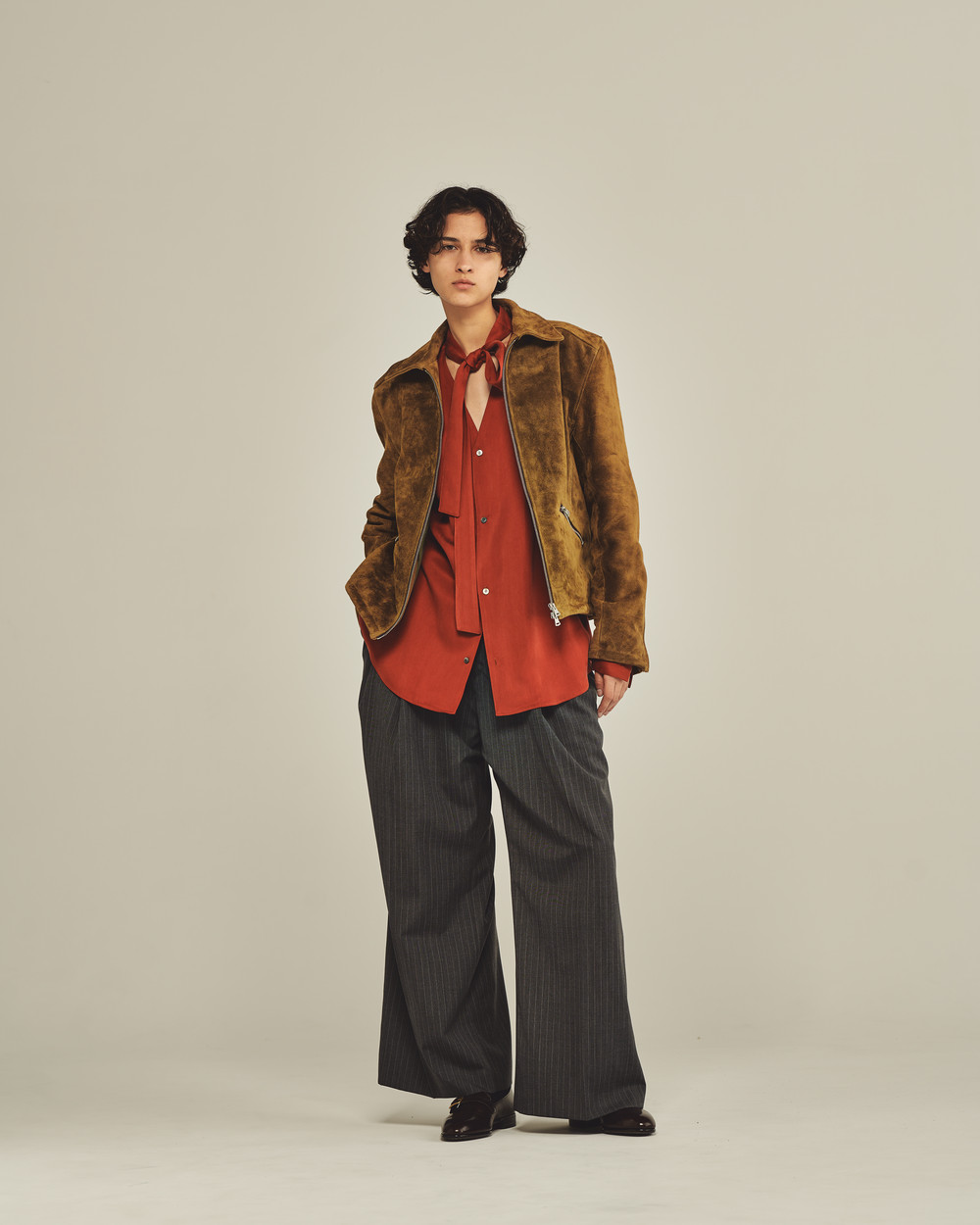
Early on, Kanayama had ideas about dressing up and Chesterfield coats, so we explored those. We had white collar and blue collar as working terms, with a rich-and-poor theme a bit like Rich Dad Poor Dad. But it felt sensitive in the current climate, and we didn’t want a theme that would hurt people. We looked for another way to express the difference between white collar and blue collar. We settled on the gentleman and the wild man, as in the film The Wild One.
It’s a rule I keep to myself and rarely talk about, but every season I pick a film as a hidden theme. I remembered this as we were talking. I spend about 350 days a year in movie T-shirts. Can you see this one?
Is that American Psycho?
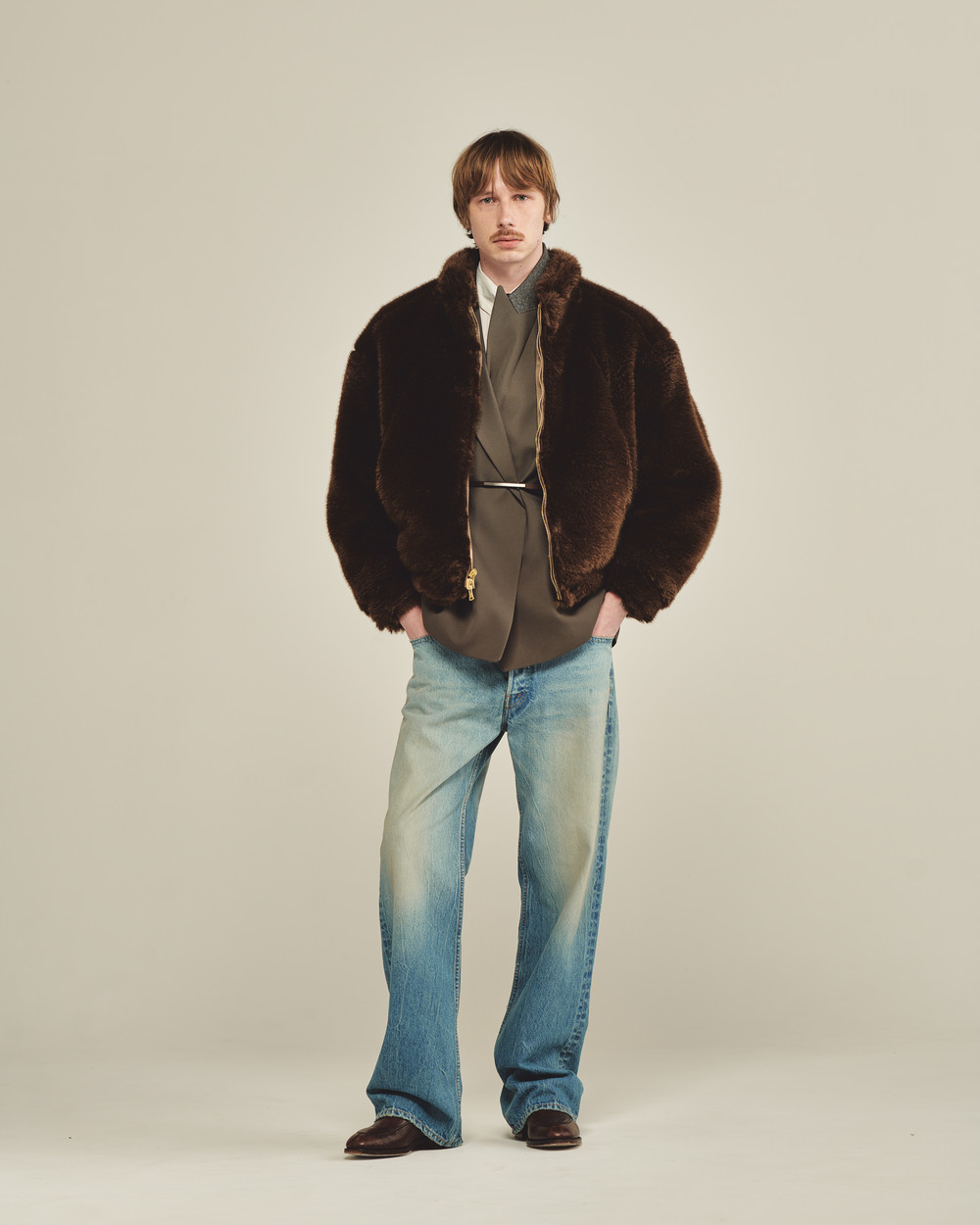
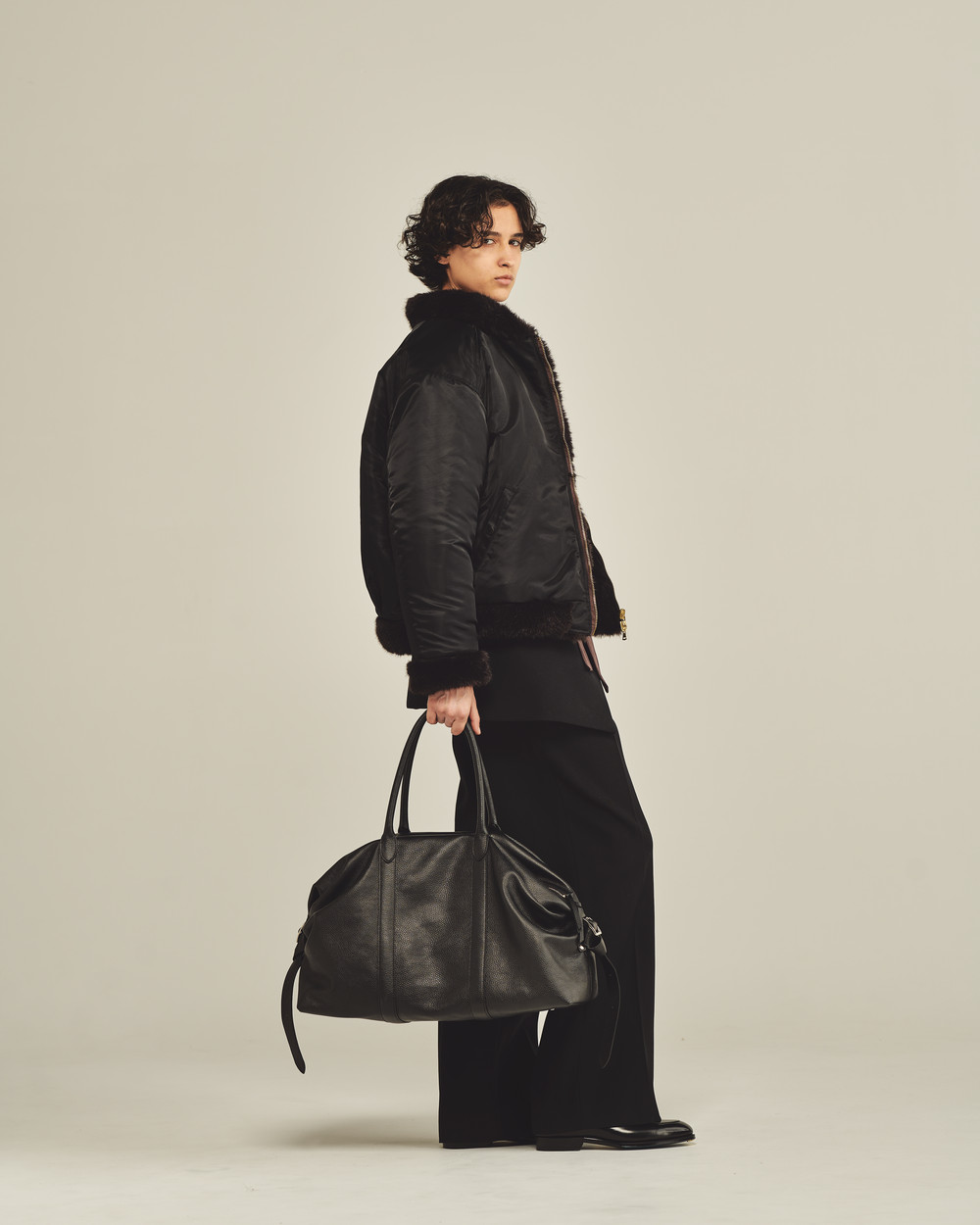
Yes. American Psycho [a film set in New York’s financial district in the 1980s] was part of the theme. I was thinking of that era’s Armani mood, Chesterfield coats and fur jackets. A kind of slightly vulgar luxury. It’s something I keep in the back of my mind at the start. Then as we pass ideas back and forth, some elements fall away and others are added.
Why did you start with rich and poor?
It really started with wanting to make a Chesterfield and do something dressy. I had a New York Wall Street mood in my head. I pictured someone in a double-breasted Chesterfield and leather gloves walking past steam billowing up from the street. That was the starting point.
CHAPTER 08
Making unexpected attention to detail the norm
Finally, where would you like to take the label?
I really want to put on a runway show. If we’re going to show in Paris, we probably need to be able to show in Tokyo first. I think SUBLATIONS occupies a distinctive place among fashion labels. I’d like us to be more firmly part of the circle of brands with a strong fashion identity, and I’d like customers to see us as part of it too.
I want the reaction we’ve talked about today, “I didn’t know they went that far,” to become something people expect. I’d like them to think, “Of course SUBLATIONS pays attention to that.” A lot of what we do is online, so I’d also like to create spaces in physical shops where people can experience the world of the label firsthand.
EXPLORE THE COLLECTION
Shop SUBLATIONS
Explore the collectionInterviewer & Text: Toru Morisaki (FASCINATE_THE R)